7-Figure Accounting Firm Owners Share the Biggest Growth Mistakes to Avoid
Scaling an accounting firm to seven figures requires avoiding a few common mistakes that slow growth. Experienced firm owners highlight three major issues: distractions during key growth periods, hiring the wrong roles too early, and failing to build a consistent sales pipeline. Firms that focus on leadership, systems, and strategic hiring are able to scale faster and with less operational stress.
Key Takeaways
-
The biggest growth mistakes accounting firm owners make are distractions, poor hiring decisions, and weak sales pipelines.
-
Successful firm owners focus on replacing themselves in operational roles and building systems that scale.
-
Consistent sales activity creates pricing power and allows firms to attract higher-value clients.
-
Clear accountability metrics and experienced hires help firms grow faster with fewer operational bottlenecks.
Introduction
Scaling an accounting firm to seven figures is rarely about working more hours. The real challenge is learning which decisions accelerate growth and which ones quietly slow it down.
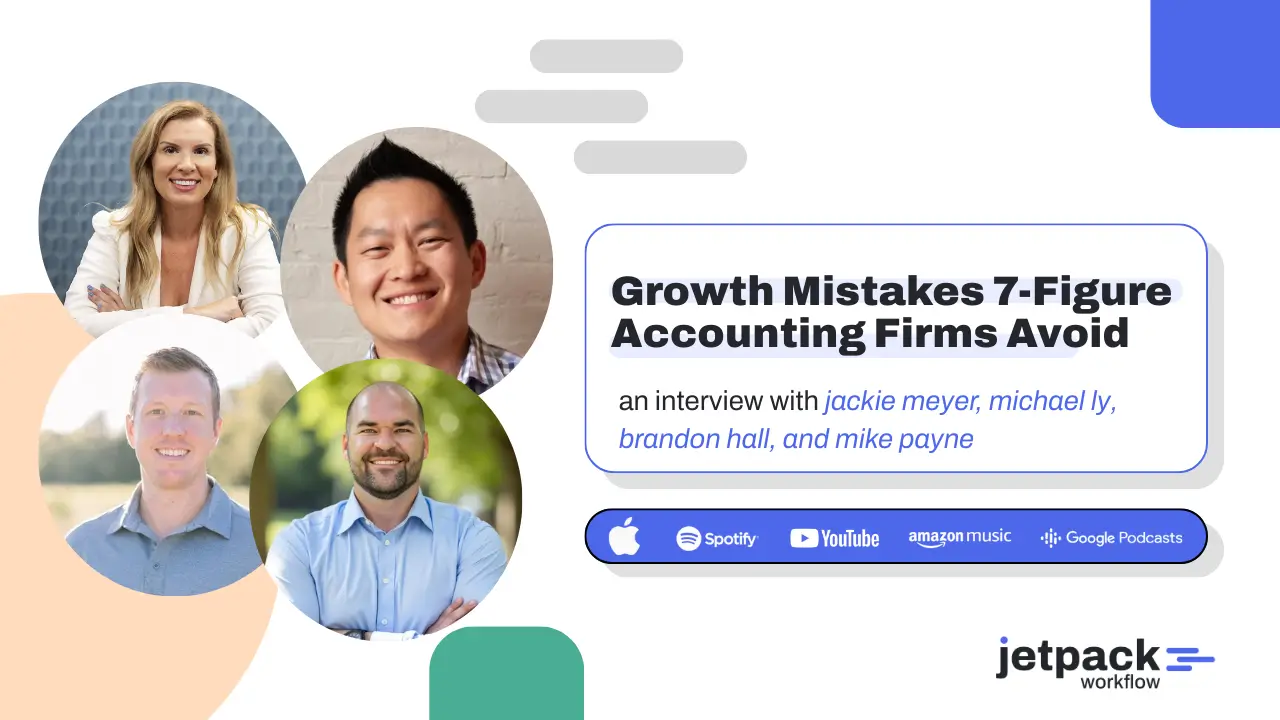
At a recent industry summit, several successful firm owners shared the mistakes they made while scaling their firms and the lessons they wish they had learned earlier. Their experiences highlighted a consistent theme: most growth challenges are not caused by technical skill gaps. They are caused by distractions, hiring missteps, and a lack of focus on sales and leadership systems.
These founders have built firms generating millions in revenue. Their insights provide a practical look at what actually drives sustainable growth in accounting firms.
“You have to set boundaries, and you have to say no to things.” – Dr. Jackie Meyer
Why do many accounting firms struggle to scale past early growth stages?
Many accounting firms struggle to scale because the owner remains the center of every process. Growth requires shifting from “I deliver the service” to “the firm delivers the service.”
During the discussion, several founders explained that the early stages of a firm often revolve around the founder’s expertise. However, scaling requires building systems, teams, and processes that operate independently from the owner.
When the founder continues handling most of the technical work, the business eventually hits a ceiling. Client capacity, team management, and strategic decisions begin competing for the same limited time.
Successful firms grow when the owner transitions from technician to operator and strategist.
What distractions slow accounting firm growth the most?
One of the most common mistakes founders mentioned was pursuing too many opportunities at once.
As firms grow, founders receive invitations to partnerships, new ventures, speaking engagements, and product ideas. While many of these opportunities are appealing, they can easily pull attention away from the core business.
Michael Ly reflected on this mistake during one of the fastest growth periods in his firm.
“During our highest growth period, I let another business venture distract me.” – Michael Ly
Even though the opportunity was exciting, it divided leadership focus during a critical period. The result was internal mistakes, operational breakdowns, and strained client relationships.
The lesson was clear: growth periods require deep focus on the primary business.
Why is hiring strategy one of the biggest growth mistakes?
Hiring decisions often determine how quickly a firm can scale.
Many founders try to protect cash flow by hiring junior staff first. While this can reduce short-term expenses, it frequently increases the founder’s workload.
Instead of freeing up leadership time, junior hires require significant training, supervision, and review.
Brandon Hall explained that this approach delayed his firm’s growth.
“I would have hired higher-quality technical people sooner.” – Brandon Hall
Experienced professionals can take ownership of technical delivery, client relationships, and workflow management. This allows founders to spend more time on activities that actually drive firm growth.
How do successful firm owners build scalable teams?
Scaling a firm requires intentionally removing the founder from day-to-day operations.
Michael Ly described a strategy that helped his firm grow significantly: documenting every role he performed and gradually hiring specialists to replace those responsibilities.
This included:
-
Technical service delivery
-
Team management
-
HR operations
-
Sales leadership
By replacing himself in these roles over time, he shifted his focus to strategic partnerships, hiring decisions, and growth initiatives.
The goal was never to remain the best service provider in the firm. Instead, the goal was to build a firm that could deliver exceptional work without relying on the founder’s time.
Why is sales the real constraint for many accounting firms?
Many firm owners believe pricing or operational efficiency is their biggest challenge. However, the panel repeatedly emphasized that sales pipelines determine growth.
When firms consistently generate new leads, they gain leverage.
nting firms.
“If you’re scared to increase the price because you’re scared to lose clients, then you have a sales problem.” – Brandon Hall
A steady pipeline allows firms to:
-
Replace lower-value clients
-
Increase pricing confidently
-
Attract higher-quality engagements
-
Improve profitability and capacity
Several strategies were discussed for building predictable pipelines, including:
-
Consistent networking and relationship building
-
Content marketing and thought leadership
-
Outbound email outreach
-
Paid lead generation channels
-
CRM-driven sales processes
How do successful firms measure team accountability?
Growth requires clear metrics that align team performance with firm goals.
One of the simplest and most effective metrics discussed was deadline completion. Firms that track deadlines consistently tend to maintain stronger operational discipline.
Other useful accountability metrics include:
-
Client retention rates
-
Cross-selling opportunities identified
-
Revenue per employee
-
Production output by team members
These metrics help firm leaders identify bottlenecks early and ensure teams remain aligned as the firm grows.
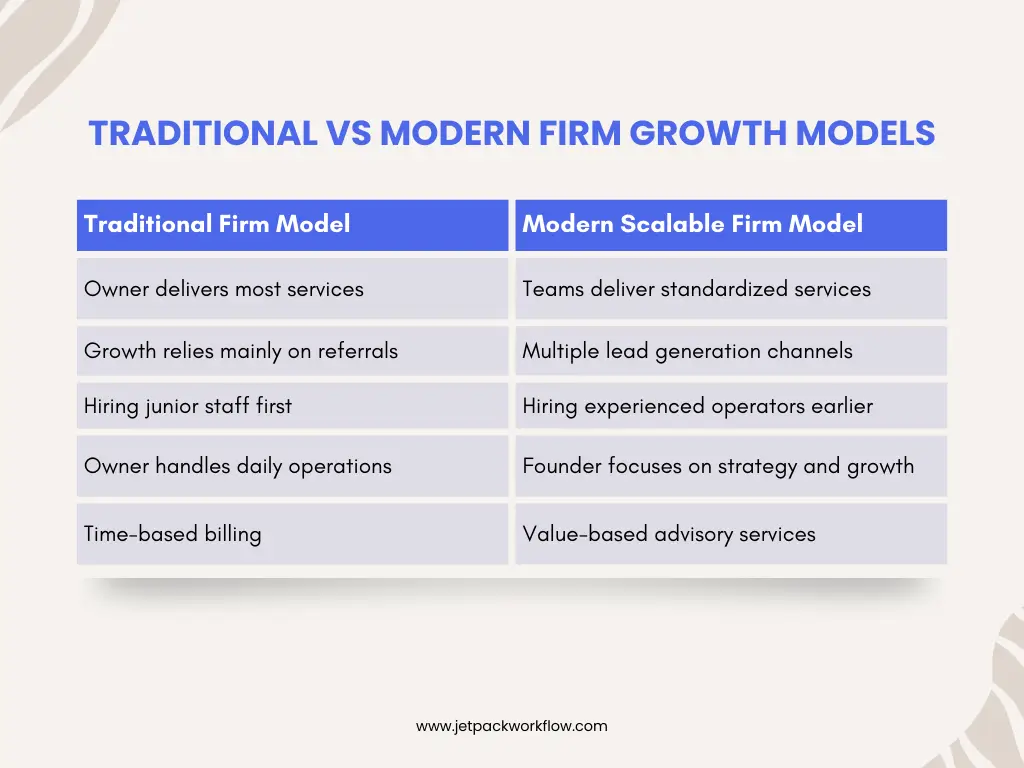
The firms that reach seven figures usually adopt the modern model earlier in their growth journey.
Frequently Asked Questions
Can accounting firms realistically reach seven figures?
Yes. Many accounting firms reach seven figures by increasing revenue per client, adding advisory services, and building systems that allow teams to deliver work efficiently.
What is the biggest growth mistake accounting firm owners make?
The most common mistake is losing focus by pursuing too many opportunities at once, which divides attention during key growth periods.
Why is hiring strategy important for firm growth?
Hiring experienced professionals earlier allows founders to step away from operational work and focus on strategy, partnerships, and growth.
How do accounting firms build predictable sales pipelines?
Firms build pipelines through networking, referrals, content marketing, outbound outreach, and structured sales processes using CRM systems.
What metrics help accounting firms scale effectively?
Key metrics include deadline completion rates, client retention, cross-selling opportunities, and revenue per employee.
Should accounting firms focus on advisory services?
Advisory services can increase revenue per client and help firms move away from purely transactional work toward strategic client relationships.
Conclusion
The experiences shared by these seven-figure firm owners reveal a clear pattern. Scaling an accounting firm is not primarily about working harder or adding more clients. It is about making better leadership decisions.
Avoiding distractions, hiring strategically, building consistent sales pipelines, and replacing yourself in operational roles are the foundations of sustainable firm growth.
Firms that make these shifts early often grow faster and with less burnout.
Related Articles
- How to Simplify Your Accounting Firm: 5 Systems to Eliminate Bottlenecks
- How to Finance Accounting Firm Acquisitions: SBA Insights from Sarah Sharp and Shannon Hay
- I Sold My Accounting Firm: A Panel Discussion on the Process and Lessons
- Inside the Minds of Firm Buyers: Lessons from Accounting M and A Leaders
- The Future of Accounting Firms in an AI Driven World with Ryan Lazanis
- How Coaching Transforms Accounting Leaders: Lessons from Douglas Slaybaugh
- What is CAS Accounting? Services, Benefits and Growth
- How Tailor Hartman Took His Accounting Firm to 200K in Year 1
- Why Outsourcing plus Workflow Software is the Future of Accounting Firms
- AI Tools That Help Accounting Firms Scale Faster
- How to Scale to a $1M Accounting Firm Without Hiring More Staff
Avoid Growth Bottlenecks as Your Accounting Firm Scales
Share this article