How Matt Gardner Scaled a Niche Accounting Firm Without Chasing Referrals
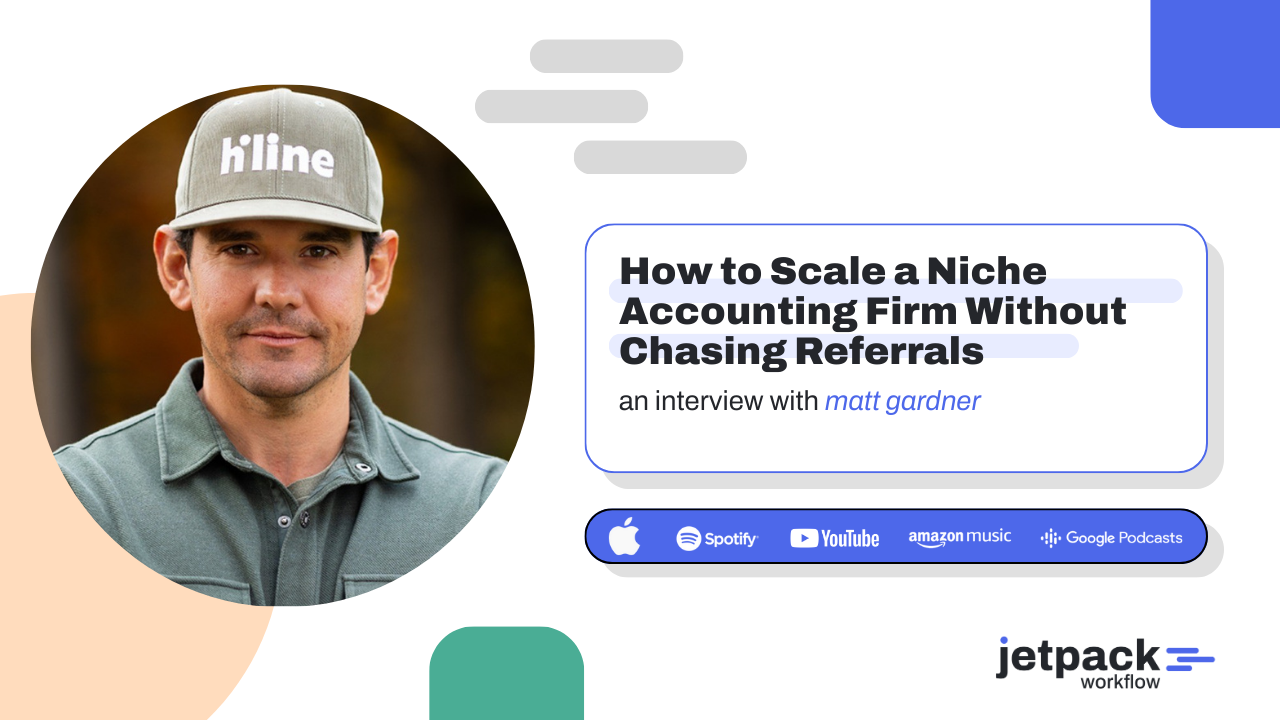
Matt Gardner scaled Hiline by moving beyond referral-only growth and building systems designed to scale. By niching down, investing ahead of demand, restructuring sales roles, and embracing automation and technology, Hiline created a predictable growth engine that does not rely on founder hustle.
Scaling an accounting firm beyond referrals is one of the hardest challenges firm owners face. In this episode of Growing Your Firm, Matt Gardner shares how Hiline grew by niching down, investing ahead of growth, and building a real go-to-market engine instead of relying on referrals or founder hustle.
Key Takeaways
-
Referrals eventually cap growth, even for high-quality firms
-
Niching down simplifies sales, marketing, and delivery
-
Investing ahead of growth creates long-term leverage
-
Founder-led sales can transition with the right structure
-
Technology and automation are central to future firm models
From Public Accounting to Building a Scalable Firm
Matt Gardner co-founded Hiline in 2016 after spending nearly a decade in public accounting. While the experience provided technical grounding, it also shaped his vision for what a modern accounting firm should not look like.
“I spent nine years doing audits, and I hated it for almost the entire nine years.”
From the beginning, Hiline was not designed as a traditional lifestyle firm. The goal was to build an accounting firm that could scale beyond the founders, operate with consistency, and grow without burning out its team.
This mindset influenced early decisions around pricing, service structure, and long-term investments.
Why Hiline Moved Beyond the Traditional Partner Model
Like many firms, Hiline originally followed the partner-name model common in accounting. That approach quickly showed its limitations.
Partner-centric branding made it harder to stand out, harder to scale geographically, and harder to build a firm that could grow independently of individual founders.
“We didn’t feel like the two names on the wall were going to get it done.”
Rebranding was not cosmetic. It reflected a shift toward building a scalable brand that clients could recognize, trust, and associate with a clear value proposition rather than specific individuals.
Using Traditional Services to Fund Growth
In its early stages, Hiline maintained a small tax and attestation practice alongside its core services. This was not intended as a long-term growth strategy.
Instead, the traditional service line generated predictable cash flow that allowed the founders to reinvest aggressively into the future of the firm. That capital funded early hires, technology investments, and internal systems that most firms delay until much later.
Over time, the traditional services became a distraction. As the core business grew faster, it became clear that focus mattered more than incremental revenue.
The firm ultimately sold off that side of the business and committed fully to a scalable accounting firm model.
Investing Ahead of Growth Instead of Reacting to It
One of the defining characteristics of Hiline’s growth strategy was investing before it felt necessary.
Rather than waiting until the firm was stretched thin, Hiline built infrastructure early. This included sales support, marketing operations, people operations, finance, and technology.
At one point, nearly half of the team was not directly involved in service delivery. This is uncommon in accounting firms but intentional.
“We were always focused on what we were going to need 18 to 24 months from now.”
This approach created leverage. When growth accelerated, the systems were already in place to support it, reducing chaos and protecting service quality.
Why Referrals Alone Eventually Cap Growth
Referrals are a powerful early growth channel for accounting firms. They signal trust and quality. But they also come with limits.
Every firm experiences churn. Referrals alone rarely replace lost revenue at scale. Eventually, growth slows even when demand exists.
Hiline experienced this firsthand. Early attempts to hire sales without sufficient inbound demand failed. Founder-led sales carried the business longer than expected, but that model was not scalable.
The lesson was clear. Sales requires demand. Demand requires positioning, brand presence, and consistent marketing.
Building a Real Go-to-Market Engine for an Accounting Firm
Hiline’s growth accelerated when go-to-market became a dedicated function instead of a side responsibility.
This included intentional investments in marketing, sales, onboarding, and customer experience. These functions were designed to work together rather than operate in silos.
Content played a central role. Instead of marketing to other accountants, Hiline focused on speaking directly to its ideal clients. The goal was clarity, not volume.
Clear positioning made sales conversations easier. Prospects understood what Hiline did, who it served, and why it was different before ever booking a call.
Why Niching Down Simplified Everything
Niching down was not about excluding opportunities. It was about focus.
By concentrating on specific client types with shared needs, Hiline improved delivery consistency, clarified its messaging, and reduced operational complexity.
Nonprofits emerged as a strong focus because of their similar financial challenges, underserved market, and alignment with Hiline’s service model.
“When you know who you serve best, sales becomes easier.”
Rather than trying to serve everyone equally, Hiline focused its go-to-market investment where product-market fit was strongest.
Rethinking Sales Roles in Accounting Firms
Sales in accounting firms is highly stage-dependent. What works early often breaks as the firm grows.
In Hiline’s early stages, sales responsibility stayed close to the work. Team members with strong technical backgrounds were best positioned to explain value, scope services accurately, and earn trust during discovery calls. This approach reduced friction and prevented overpromising.
As Hiline’s positioning became clearer and inbound demand increased, the sales function evolved into a more traditional structure supported by marketing.
Key shifts in Hiline’s sales model included:
-
Moving from founder-led sales to trained internal sellers
-
Aligning sales roles with clear niches and ideal client profiles
-
Supporting sales with inbound content and brand visibility
Compensation also mattered. Sales incentives were tied to accountability, not just activity. Clear quotas and outcomes created focus and predictability.
This evolution reduced pressure on the founders while creating a scalable, repeatable revenue engine that could grow with the firm.
Technology, Automation, and the Future of Accounting Firms
Technology is not an add-on in Hiline’s operating model. It is foundational to how the firm scales.
Automation and AI are used to reduce manual work, improve consistency, and eliminate repetitive tasks that limit capacity. This allows teams to spend more time on insight, problem-solving, and advisory work.
Hiline’s approach to technology focuses on:
-
Automating transactional and repetitive workflows
-
Integrating systems to reduce handoffs and errors
-
Using data to surface insights, not just reports
Firms that invest early in automation and system design gain leverage. They can support more clients without increasing burnout or headcount at the same rate.
This shift also changes the role of accountants. Instead of acting primarily as processors, team members become system thinkers, advisors, and interpreters of financial information. Firms that adapt early are better positioned for long-term relevance and growth.
Building an Accounting Firm for the Long Term
Hiline’s approach emphasizes strategic positioning over operational sameness.
Many accounting firms compete primarily on efficiency and responsiveness. Over time, this leads to price pressure and burnout.
Strategic positioning creates differentiation. Combined with early investment, clear niches, and strong systems, it allows firms to grow sustainably.
Conclusion
Scaling an accounting firm without chasing referrals requires a fundamental shift. Matt Gardner’s experience at Hiline shows that predictable growth comes from clarity, intentional investment, and systems built for the future.
By niching down, building a real go-to-market engine, and embracing technology, accounting firms can move beyond founder-led growth and create businesses that truly scale.
Frequently Asked Questions
How did Matt Gardner scale Hiline without relying on referrals?
Matt Gardner scaled Hiline by niching down, investing ahead of growth, and building a structured go-to-market engine. Referrals helped early, but predictable growth came from systems, positioning, and inbound demand.
Why do referrals eventually stop working for accounting firms?
Referrals plateau as firms grow and cannot consistently replace churn. Without marketing, positioning, and sales systems, growth slows even when demand exists.
Why is niching down important for accounting firm growth?
Niching down simplifies marketing, sales, and delivery. It improves product-market fit, shortens sales cycles, and allows firms to build repeatable systems.
How should accounting firms think about sales roles?
Sales roles should evolve with the firm’s stage. Early sales often work best with technically strong team members. As positioning matures, firms can support dedicated sales roles with inbound demand.
What role does technology play in scaling an accounting firm?
Technology and automation reduce manual work, increase consistency, and create capacity for advisory services. Firms that invest early gain long-term leverage and scalability.
Related Articles
- The First 100 Days After an Acquisition: Ashley Rhoden’s Integration Framework
- Questions Every Firm Leader Should Ask Before Taking Private Equity: Jennifer Wilson’s Guide
- How to Finance Accounting Firm Acquisitions: SBA Insights from Sarah Sharp and Shannon Hay
- I Sold My Accounting Firm: A Panel Discussion on the Process and Lessons
- Inside the Minds of Firm Buyers: Lessons from Accounting M and A Leaders
- The Future of Accounting Firms in an AI Driven World with Ryan Lazanis
- How Coaching Transforms Accounting Leaders: Lessons from Douglas Slaybaugh
- What is CAS Accounting? Services, Benefits and Growth
- How Tailor Hartman Took His Accounting Firm to 200K in Year 1
- Why Outsourcing plus Workflow Software is the Future of Accounting Firms
- AI Tools That Help Accounting Firms Scale Faster
Build Predictable Growth Without Relying on Referrals
If your firm has hit a growth ceiling or still depends heavily on founder-led sales and referrals, it may be time to rethink how your workflows support scale.
Start a free trial of Jetpack Workflow to see how standardized processes, real-time visibility, and scalable systems help accounting firms grow with clarity and consistency.
Share this article