The Future of the Accounting Profession: What Firm Leaders Must Prepare for Now
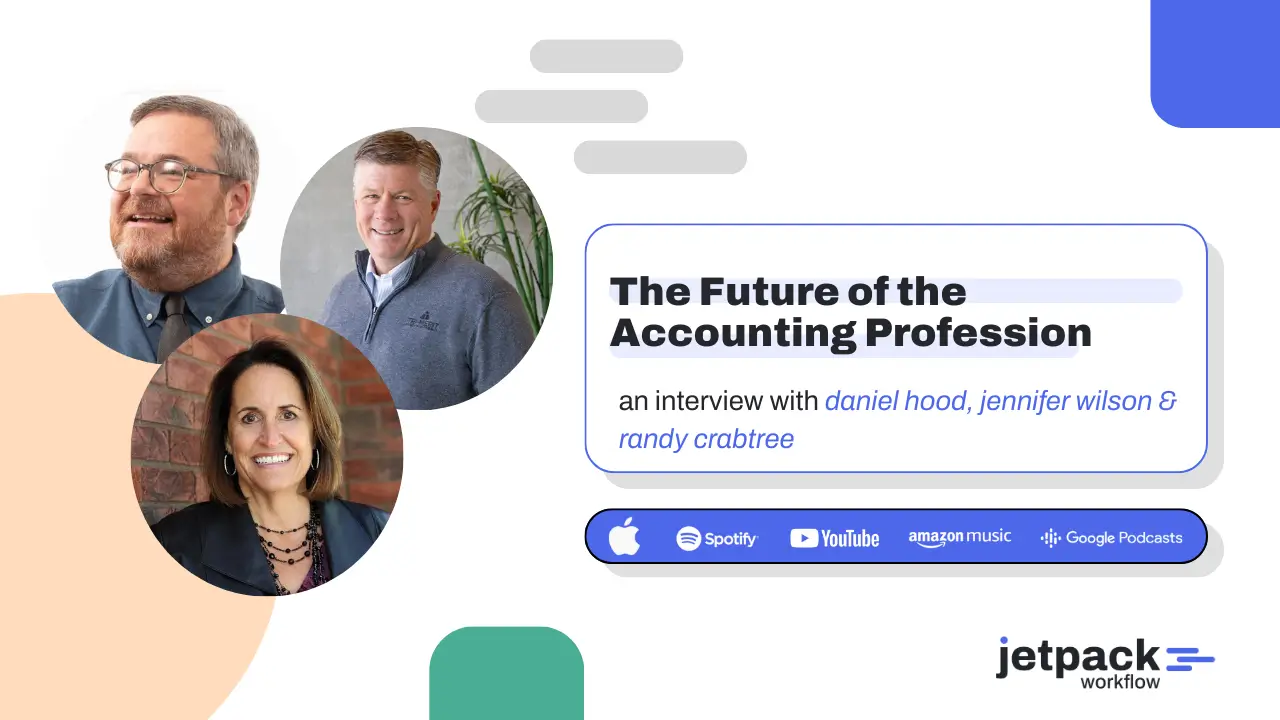
Firm leaders throughout the accounting industry are reassessing how their organizations grow, function, and remain sustainable in a time of constant change. In this Future of the Profession roundtable from the Growing Your Firm Summit, industry voices Daniel Hood, Jennifer Wilson, and Randy Crabtree come together to unpack what firm leaders must prepare for next.
Drawing on decades of experience across accounting media, firm leadership, coaching, and specialization, the panel explores the real challenges facing firms today, from burnout and outdated business models to cultural shifts, AI adoption, and change management. Rather than focusing on fear or hype, the discussion offers grounded insights into where opportunity exists for firms willing to adapt with intention and clarity.
Key Takeaways
-
The accounting profession is not in decline, but it is being reshaped by culture shifts, AI, and new business models.
-
Burnout, outdated firm structures, and poor change management are bigger threats than technology itself.
-
AI will not replace accountants, but firms that fail to adapt how they work will fall behind.
-
Firms that invest in communication, leadership skills, and niche expertise will outperform peers.
-
The next decade will reward firms that move from compliance-first to advisory-led models.
The future of the accounting profession is bright, but only for firms willing to change how they operate. Firm leaders must prepare now for cultural shifts, rapid technology adoption, and evolving expectations from clients and staff.
“I think the future of the profession is pretty bright. There’s a lot of challenges going forward, but I think in general, there are a lot of opportunities for accountants.” – Daniel Hood
That optimism is justified, but it comes with responsibility.
What Is Changing in the Accounting Profession Right Now?
The accounting profession is experiencing more change in this decade than it did in the previous hundred years. Technology, client expectations, workforce dynamics, and firm ownership models are all shifting at once.
At the center of this conversation are leaders like Daniel Hood, Jennifer Wilson, and Randy Crabtree, who have spent years observing how firms operate and where they struggle.
Key changes reshaping firms today include:
-
The erosion of rigid, billable-hour-first firm models
-
Rapid adoption of AI and workflow automation
-
A shift from compliance-heavy work to advisory services
-
Cultural tension driven by succession, private equity, and generational turnover
These are not temporary disruptions. They represent a structural shift in how firms must operate to remain relevant.
What Are Firm Leaders Most Worried About?
Firm leaders are less worried about technology itself and more concerned about what might be lost along the way.
1. Cultural Drift Inside the Profession
One of the strongest concerns raised during the discussion was cultural. As ownership structures evolve, some firms risk losing the profession’s long-standing commitment to serving clients, people, and communities, not just shareholders.
“What I’m most worried about right now is shifting our culture in the profession… making it okay to be focused on my personal benefit versus the greater good.” – Jennifer Wilson
When culture weakens, trust declines internally and externally.
2. Burnout Driven by Math, Not Motivation
Burnout remains one of the most damaging forces in accounting firms, and it is rarely caused by a lack of passion.
Instead, it is driven by simple arithmetic. Workload continues to increase while staffing and systems lag behind. Busy seasons now stretch across the entire year, making recovery impossible.
This is not sustainable leadership. It is deferred failure.
3. Resistance to Necessary Change
For decades, firms could afford to wait. That era is over.
Some leaders believe they can delay change because retirement is near. That mindset shifts the cost of inaction onto successors, teams, and clients. Firms that fail to build change capability now will struggle later.
Why Is Change Management Now a Core Accounting Skill?
Change management is no longer optional. It is a leadership competency.
The problem is not that firms need to change. The problem is that most firms are not equipped to manage change well.
Effective change requires:
-
Clear and repeated communication
-
Early involvement of skeptics and objectors
-
Defined ownership and timelines
-
Space for feedback and course correction
Poor execution drains energy. Strong leadership reduces friction.
“Change is fatiguing because it takes so long.” – Jennifer Wilson
Accounting professionals are trained for precision, not persuasion. Yet communication is the engine of successful transformation.
How Will AI Impact the Accounting Profession?
AI is not replacing accountants. It is replacing the least valuable parts of their work.
What AI Will Remove
AI will continue to automate:
-
Transaction coding
-
Reconciliations
-
Draft compliance outputs
-
Repetitive reporting tasks
These activities consume time without deepening client relationships.
What AI Will Enable
AI allows accountants to focus on:
-
Advisory conversations
-
Scenario modeling
-
Strategic planning
-
Relationship-driven client work
This mirrors past technology shifts, such as spreadsheets replacing manual ledgers. Automation elevated the profession then, and it will do so again.
What Business Models Are Gaining Momentum?
The profession now has permission to rethink assumptions that once felt immovable.
1. Moving Beyond the Billable Hour
More firms are adopting:
-
Fixed-fee pricing
-
Subscription services
-
Outcome-based advisory packages
These models align value with results, not time logged.
2. Advisory-First Firm Design
Compliance work remains essential, but it no longer needs to define a firm’s identity.
Advisory services include:
-
Cash flow planning
-
Tax strategy
-
Growth and profitability analysis
-
Operational decision support
Firms that package advisory intentionally see higher margins and stronger client loyalty.
3. Niche and Lifestyle Firms
Not every firm needs to scale aggressively.
Some leaders are choosing smaller teams, focused industries, and predictable workloads. Others are leaning into niche expertise, creating clarity and differentiation in crowded markets.
What Opportunities Are Firms Overlooking Right Now?
1. Strategic Hiring During Uncertainty
Periods of economic uncertainty slow job movement, creating opportunities to attract high-quality talent that may not be actively searching.
2. Client Transitions
Mergers and ownership changes leave some clients seeking alternatives. Firms with strong culture and clarity can attract them.
3. Knowledge Sharing as a Growth Strategy
Sharing expertise builds trust. As Randy Crabtree emphasized, educating others often creates demand rather than diminishing value.
“Educating others often creates demand rather than diminishing value.” – Randy Crabtree
Conclusion
The future of the accounting profession will favor firms that adapt without abandoning their values. Technology and AI create leverage, but leadership determines outcomes.
Firms that act now can build healthier teams, stronger client relationships, and sustainable growth models.
To explore how modern workflow systems support advisory-first accounting firms, book a demo or access free resources designed to help firms prepare for what comes next.
FAQs About the Future of the Accounting Profession
What is the future of the accounting profession?
The future of accounting is advisory-led, technology-enabled, and relationship-focused, with compliance as a foundation rather than the destination.
Will AI replace accountants?
No. AI replaces repetitive tasks, not professional judgment, strategy, or relationships.
Why are accounting firms struggling with burnout?
Burnout occurs when workload grows faster than systems and staffing, not because people lack resilience.
How should firms prepare for change?
Firms should invest in leadership development, communication, and technology while involving teams early.
Are advisory services in demand?
Yes. Clients increasingly expect proactive guidance, not just historical reporting.
Related Articles
- Questions Every Firm Leader Should Ask Before Taking Private Equity: Jennifer Wilson’s Guide
- How to Finance Accounting Firm Acquisitions: SBA Insights from Sarah Sharp and Shannon Hay
- I Sold My Accounting Firm: A Panel Discussion on the Process and Lessons
- Inside the Minds of Firm Buyers: Lessons from Accounting M and A Leaders
- The Future of Accounting Firms in an AI Driven World with Ryan Lazanis
- How Coaching Transforms Accounting Leaders: Lessons from Douglas Slaybaugh
- What is CAS Accounting? Services, Benefits and Growth
- How Tailor Hartman Took His Accounting Firm to 200K in Year 1
- Why Outsourcing plus Workflow Software is the Future of Accounting Firms
- AI Tools That Help Accounting Firms Scale Faster
- Real-Time Visibility Into Client Work and Team Capacity for Accounting Firms
Prepare Your Firm for the Next Era of Accounting
If your firm is feeling the strain of year-round busy seasons, growing workloads, or constant change, it may be time to rethink how your workflows support advisory work and long-term sustainability.
See how Jetpack Workflow helps accounting firms standardize recurring work, improve visibility across teams, and create capacity for higher-value client advisory services.
Share this article