Using AI to Improve Client Onboarding and Task Management in Accounting Firms
Accounting firms can significantly improve client experience and internal efficiency by using AI during onboarding and task management. Tools like Otter AI, ChatGPT, and workflow systems help automate call summaries, create task lists, and streamline follow-ups while keeping communication clear and personalized. By combining automation with structured workflows, firms can deliver faster service without losing the human touch.
Key Takeaways
-
AI can automate client call notes, follow-up emails, and onboarding tasks.
-
Recording tools like Otter AI help prevent missed details and miscommunication with clients.
-
ChatGPT can convert call transcripts into task lists and client summaries.
-
Automation improves client experience while reducing administrative workload for firm owners.
Introduction
Improving the client experience in an accounting firm often depends on how well onboarding and communication are handled. Many firms struggle with missed details after discovery calls, inconsistent follow-ups, and scattered task management systems.
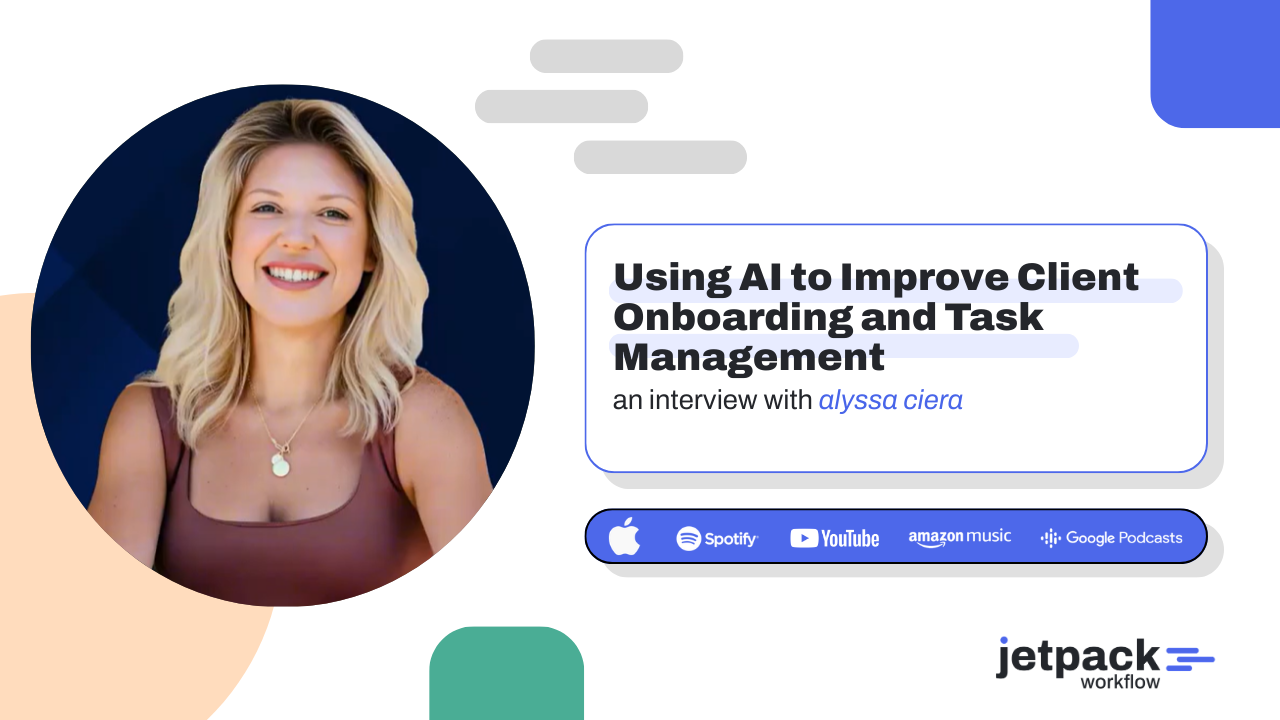
At a recent industry summit session, Alyssa J. Ciera, CEO and Founder of Ciera + Co. Consulting & Cashflow, shared how her firm uses AI tools and automation to streamline the client onboarding journey and manage internal tasks more efficiently.
When she launched her firm in 2016, most of these tools did not exist, and processes required significant manual effort. Today, AI allows accounting firms to automate repetitive work while maintaining a strong client relationship.
Today, we can create a way better experience for our clients with the use of AI, and still make it feel like it has that human touch.” – Alyssa
How can AI improve the client onboarding experience?
AI improves onboarding by automating communication and preparing both the firm and the client before the first conversation takes place.
According to Ciera, automation should begin the moment a prospect schedules a call. Calendar tools such as Calendly or Acuity can trigger automated workflows that begin preparing the client immediately.
These workflows may include:
-
Sending a welcome email introducing the firm
-
Sharing testimonials or client success stories
-
Providing instructions on what to expect during the consultation
These early touchpoints help warm up the client before the call even begins.
Instead of entering a meeting cold, the client already understands the firm’s approach, which creates a more productive conversation and a better first impression.
Why recording client calls improves communication
Discovery calls often include a large amount of information about the client’s business, financial systems, and goals. Remembering every detail after the call can be difficult.
Ciera recommends using AI call transcription tools to record and summarize conversations automatically.
Her firm uses Otter AI to join Zoom calls and generate transcripts of every meeting. These transcripts provide a complete record of the discussion and help prevent misunderstandings later.
“If you don’t have something recording your calls, it’s going to save your life so many times.” – Alyssa
Having a transcript allows the team to verify what was discussed if questions arise about pricing, services, or expectations.
It also eliminates the stress of relying entirely on memory or handwritten notes after a client conversation.
How AI can turn call transcripts into tasks
One of the most valuable uses of AI is converting call transcripts into actionable work.
After each client call, Ciera’s team feeds the transcript into ChatGPT. The AI then analyzes the conversation and generates structured outputs that the team can use immediately.
These outputs include:
-
A summary of the conversation
-
A list of client needs and service requirements
-
A follow-up email summarizing the discussion
-
A checklist of documents and information needed for onboarding
This process allows the firm to quickly transform a conversation into an organized action plan.
“We take that transcript and ask AI to tell us everything we need to gather from the client.” – Alyssa
Instead of manually reviewing notes and creating task lists, the team receives an organized set of next steps within seconds.
How AI helps automate follow-up emails
Follow-up communication is one of the most important steps in the onboarding process.
Using AI-generated summaries, firms can quickly send personalized emails after client calls. These messages may include:
-
A recap of the discussion
-
The services proposed during the call
-
Next steps for moving forward
-
Instructions for scheduling the onboarding meeting
If the client has not yet made a decision, the email can simply invite them to reply when they are ready to proceed.
This approach keeps communication clear and professional while reducing the time spent writing follow-up messages manually.
How structured task management improves firm operations
AI becomes even more powerful when it is combined with a structured workflow system.
In Ciera’s firm, each client’s work is organized into task “buckets” that represent different service areas.
Examples include:
-
Sales tax tasks
-
Income tax tasks
-
Weekly or daily bookkeeping tasks
-
Month-end closing procedures
-
Cleanup and catch-up work
-
Client onboarding tasks
Within each bucket are detailed tasks assigned to specific team members.
When a new client signs up, the onboarding workflow automatically creates the necessary tasks and assigns them to the appropriate team members.
This ensures the firm follows a consistent process for every new engagement.
How AI can generate onboarding checklists
AI tools can also generate detailed onboarding checklists based on information gathered during client conversations.
For example, after analyzing a call transcript, ChatGPT might recommend tasks such as:
-
Request access to QuickBooks or accounting software
-
Gather bank account and credit card statements
-
Confirm payroll provider information
-
Collect prior tax returns or financial reports
-
Identify integrations required for the client’s workflow
Instead of building these lists manually, firms can quickly generate them using AI prompts.
relationship.
“The beauty is in the prompt. If you give AI your transcript and ask it to create tasks, it can build the entire list for you.” – Alyssa
This approach ensures that important details are not overlooked during onboarding.
Conclusion
AI is rapidly transforming how accounting firms manage client communication and internal workflows. By using tools that record calls, summarize conversations, and generate onboarding tasks, firms can create a smoother client experience while reducing administrative workload.
As demonstrated by Alyssa J. Ciera, combining AI tools with structured task management systems allows firms to streamline operations and deliver consistent service without increasing complexity.
Workflow systems help bring all of these processes together, giving accounting firms the visibility and structure they need to manage recurring client work effectively.
Frequently Asked Questions
How can AI improve client onboarding in accounting firms?
AI can automate communication, summarize calls, generate follow-up emails, and create onboarding task lists, making the process faster and more consistent.
What AI tools are useful for accounting firms?
Popular tools include ChatGPT for generating summaries and task lists, Otter AI for call transcription, and workflow platforms that manage deadlines and tasks.
Why should accounting firms record discovery calls?
Recording calls helps ensure that important details are not forgotten and provides a reference point if questions arise later about services or pricing.
Can AI generate task lists for accounting workflows?
Yes. AI tools can analyze call transcripts and automatically generate task lists based on client needs and services discussed.
Does AI replace the human relationship with clients?
No. AI handles administrative tasks so accountants can spend more time providing advice and building relationships with clients.
Is AI affordable for small accounting firms?
Many AI tools are relatively inexpensive compared to the time savings they provide. For example, ChatGPT subscriptions and call transcription tools are widely accessible.
Related Articles
- Questions Every Firm Leader Should Ask Before Taking Private Equity: Jennifer Wilson’s Guide
- How to Finance Accounting Firm Acquisitions: SBA Insights from Sarah Sharp and Shannon Hay
- I Sold My Accounting Firm: A Panel Discussion on the Process and Lessons
- Inside the Minds of Firm Buyers: Lessons from Accounting M and A Leaders
- The Future of Accounting Firms in an AI Driven World with Ryan Lazanis
- How Coaching Transforms Accounting Leaders: Lessons from Douglas Slaybaugh
- What is CAS Accounting? Services, Benefits and Growth
- How Tailor Hartman Took His Accounting Firm to 200K in Year 1
- Why Outsourcing plus Workflow Software is the Future of Accounting Firms
- AI Tools That Help Accounting Firms Scale Faster
- How to Scale to a $1M Accounting Firm Without Hiring More Staff
Enhance Client Experience with Smarter Accounting Workflows
Share this article