Why Talent Is the Real Growth Constraint for Accounting Firms: Insights from Jennifer Wilson
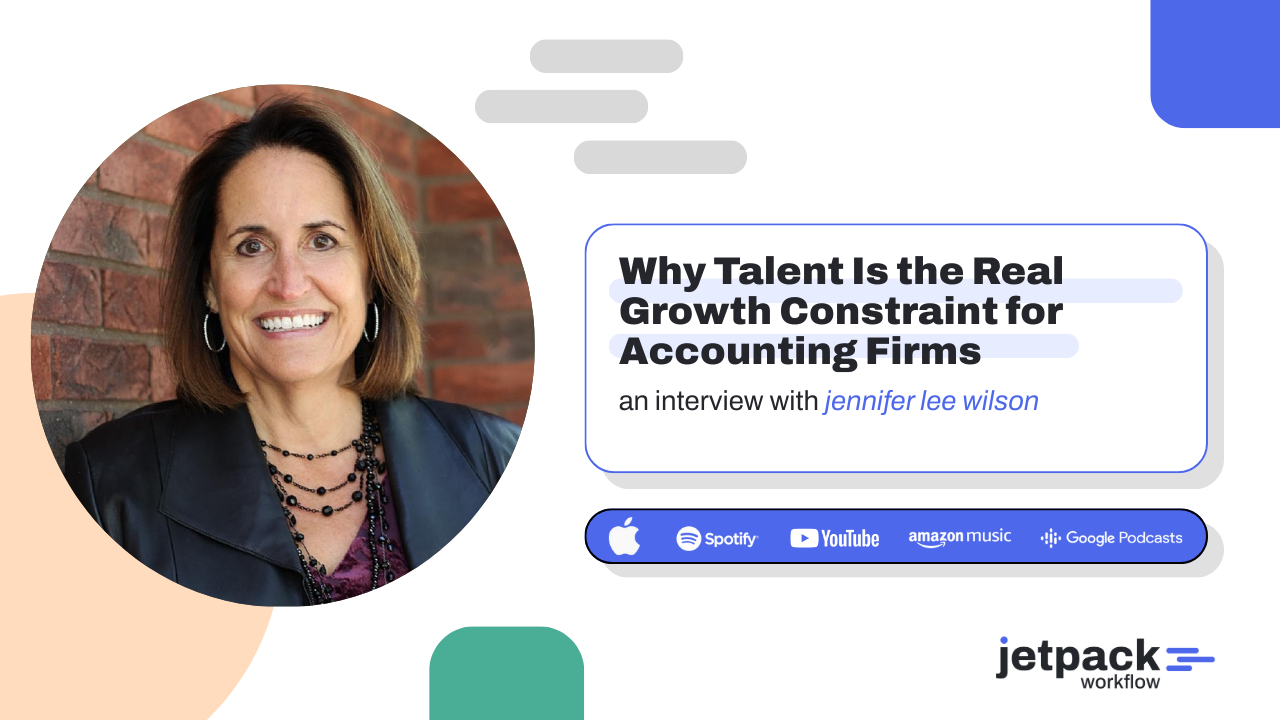
For years, accounting firm leaders have searched for growth answers in technology, pricing models, outsourcing, or capital. But according to Jennifer Wilson, the real constraint sits elsewhere. Talent.
Key Takeaways
-
Talent shortages are driven by long-term demographic realities, not short-term hiring tactics
-
Accounting competes directly with other business majors on compensation and lifestyle
-
The profession’s public narrative actively discourages new entrants
-
Employers hold the most leverage in solving the talent problem
-
Firms that redesign work, pricing, and expectations attract stronger talent pipelines
In her conversation on the Growing Your Firm podcast hosted by David Cristello, Jennifer reframes the talent discussion away from hiring tactics and toward long-term demographic, economic, and cultural realities that firms can no longer ignore.
“It’s not AI. It’s not PE. It’s talent. Talent.”
This framing matters because it shifts the problem from a short-term recruiting challenge to a structural issue affecting every firm’s ability to grow, transition ownership, and remain sustainable.
The Demographic Reality Firms Are Up Against
Jennifer starts at the macro level, emphasizing that accounting’s talent shortage is part of a much larger labor market shift.
-
The over-65 population in the U.S. is growing rapidly
-
Baby boomers are retiring at roughly 10,000 people per day
-
The working-age population is growing slowly and projected to decline
-
Fewer young people are entering the accounting profession
These trends compound each other. As experienced professionals exit the workforce, there are fewer replacements entering behind them, and the competition for talent intensifies across every industry.
“We are not growing our working-age population in this country.”
Why Fewer Students Choose Accounting
Jennifer draws from her work facilitating the National Pipeline Advisory Group, which studied the issue in depth through research and surveys of students and practitioners.
Several factors consistently surfaced:
-
Accounting starting salaries lag behind other business majors
-
Salary growth has not kept pace with inflation
-
The additional 150-hour education requirement adds cost and time
-
The profession’s public narrative emphasizes burnout and overtime
Students compare accounting to finance, economics, analytics, and technology roles that offer higher starting pay and faster financial stability.
“Out of college, why would I major in accounting when I could make more money on day one in another business major?”
This comparison is happening earlier than many firm leaders realize, often before students even reach college.
The Profession’s Branding Problem
Beyond compensation, Jennifer points to a self-inflicted brand issue. Accountants often highlight the hardest parts of the job publicly, especially during busy season.
-
Long hours
-
Stressful deadlines
-
Constant regulatory change
-
Overtime as a badge of honor
While these realities exist, they dominate the narrative far more than the positives of the profession.
Busy season is one of the biggest accidental marketing campaigns they need to get rid of. When students and early-career professionals see this messaging repeatedly, it reinforces the decision to choose other paths.
Why Employers Hold the Biggest Lever
One of Jennifer’s clearest points is that solving the talent issue does not primarily sit with educators or regulators. It sits with employers.
Firms that are making progress tend to:
-
Increase starting salaries to remain competitive
-
Smooth or redesign busy seasons
-
Reduce reliance on overtime
-
Stop pricing purely on time
-
Invest in operational roles that protect professional capacity
These changes are not cosmetic. They require firms to rethink how work is priced, delivered, and managed.
“Most of the solutions lie at the feet of the employers.”
While these shifts require investment, Jennifer emphasizes that firms are also the primary beneficiaries when talent retention and attraction improve.
Conscious Capitalism vs Short-Term Optimization
Jennifer closes with a broader reflection on how firm ownership decisions affect talent strategy.
Historically, many accounting firms practiced what she describes as conscious capitalism, balancing:
-
Client outcomes
-
Team wellbeing
-
Community impact
-
Owner returns
She contrasts this with more transactional models focused on short-term financial optimization, which can undermine long-term talent sustainability.
Firms that intend to pass ownership to the next generation tend to invest differently than firms optimizing for near-term exits.
Conclusion
Jennifer Wilson’s perspective reframes talent as the central operating constraint for accounting firms, not a side issue to be solved with better job ads or recruiting software.
Firms that want to grow, transition ownership, and remain competitive must address compensation, workload, and culture as strategic priorities, not HR initiatives.
Talent is not just a staffing issue. It is the foundation every other growth strategy depends on.
Frequently Asked Questions
Why is talent the biggest growth constraint for accounting firms?
Jennifer Wilson explains that demographic shifts, retirements, and slow growth in the working-age population are shrinking the talent pool, making growth harder for firms.
Why are fewer students choosing accounting?
Lower starting pay compared to other business majors, the cost of the 150-hour requirement, and negative perceptions around busy season and overtime all play a role.
Is the 150-hour CPA requirement a barrier?
Yes. Jennifer notes the extra time and cost discourage students who can earn sooner in other majors.
Can AI or offshoring solve the talent shortage?
They can help, but Jennifer says they will not replace the need for human talent, especially long term.
What can firms do now to improve hiring and retention?
Firms can pay competitively, reduce overtime, improve work models, add operational support roles, and improve how the profession presents itself.
Is the CPA credential still valuable?
Yes. Jennifer emphasizes that the CPA remains trusted and respected, even as the profession adapts.
Related Articles
- The First 100 Days After an Acquisition: Ashley Rhoden’s Integration Framework
- Questions Every Firm Leader Should Ask Before Taking Private Equity: Jennifer Wilson’s Guide
- How to Finance Accounting Firm Acquisitions: SBA Insights from Sarah Sharp and Shannon Hay
- I Sold My Accounting Firm: A Panel Discussion on the Process and Lessons
- Inside the Minds of Firm Buyers: Lessons from Accounting M and A Leaders
- The Future of Accounting Firms in an AI Driven World with Ryan Lazanis
- How Coaching Transforms Accounting Leaders: Lessons from Douglas Slaybaugh
- What is CAS Accounting? Services, Benefits and Growth
- How Tailor Hartman Took His Accounting Firm to 200K in Year 1
- Why Outsourcing plus Workflow Software is the Future of Accounting Firms
- AI Tools That Help Accounting Firms Scale Faster
Build a firm that talent wants to join and stay in
Jetpack Workflow helps accounting firms design repeatable processes, improve capacity planning, and support healthier workloads so teams can do their best work without burnout.
Share this article