How a Remote Accounting Firm Uses EOS to Scale from 6 to 10 Team Members in 90 Days
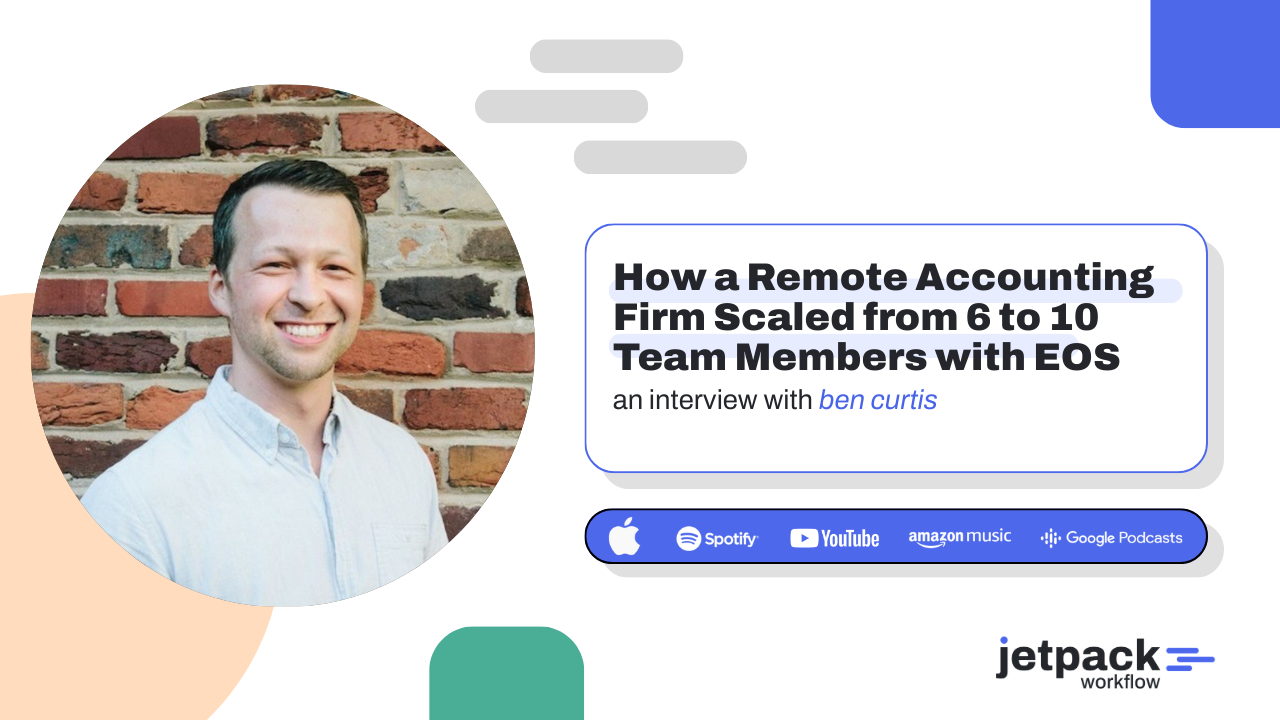
A remote accounting firm scaled quickly by first building strong systems using EOS (Entrepreneurial Operating System). Instead of relying on ads, growth came from long-term relationships. Clear roles, weekly meetings, time tracking, and proactive workflows helped the team handle rapid client and team growth without operational chaos.
Key Takeaways
-
EOS helps remote accounting firms define roles, priorities, and accountability before scaling
-
Slow, intentional growth builds systems that can handle rapid expansion later
-
Relationship-driven marketing can generate high-quality inbound clients over time
-
Time tracking and effective hourly rate are critical for managing profitability
-
Weekly workflows and proactive communication help reduce workload pressure and improve team capacity
Introduction
Scaling a remote accounting firm is rarely just about getting more clients. Most firms struggle when growth outpaces their systems, leading to overwhelmed teams, inconsistent processes, and missed deadlines.
In this case, the firm took a different approach. Led by Ben Curtis, CPA, Cofounder and CEO of Good Measure Financial, the team spent years building a strong operational foundation using EOS before experiencing rapid growth. Instead of rushing to scale, they focused on structure, accountability, and having the right people in the right roles.
“We really intentionally grew slowly… building a solid foundation with the right team members and the right systems in place.”- Ben
That decision made all the difference when growth accelerated.
Because their systems were already in place, they were able to scale from 6 to 10 team members in just 90 days without creating operational chaos or sacrificing service quality.
How did this remote accounting firm scale so quickly?
The firm grew from 6 to 10 team members in about 90 days, but the growth itself was not sudden in origin.
It came from years of relationship-building.
Rather than relying heavily on ads or outbound tactics, the firm focused on:
-
Building trust with referral partners
-
Having consistent conversations with their network
-
Providing value without expecting immediate returns
Over time, these efforts compounded and led to a strong pipeline of aligned clients.
How does EOS help a remote accounting firm scale?
The firm uses EOS as a flexible framework, not a rigid system. They apply what works and ignore what does not fit their size or structure.
Key EOS elements they rely on include:
-
Vision Traction Organizer (VTO) for clarity and direction
-
Weekly Level 10 (L10) meetings for accountability
-
Clear role ownership across leadership
-
Quarterly priorities to stay focused
These systems ensure the team stays aligned even during periods of rapid change.
How are roles structured in a growing remote accounting firm?
Clear role definition was established early and maintained as the firm scaled.
Responsibilities were divided across leadership functions:
-
Operations, systems, and team management
-
Sales, marketing, and relationship development
They also separate ownership from operational roles, which helps maintain accountability and avoid confusion as the team grows.
What KPIs does the firm use to manage growth?
The firm focuses on a small number of metrics that drive most operational decisions.
Core KPIs include:
-
Time tracking (actual vs expected)
-
Effective hourly rate
-
Team capacity
-
Service line performance
Time tracking is especially important, not as a control mechanism but as a diagnostic tool.
“The time tracking allows us to actually have all those conversations… there’s always a story behind the numbers.” – Ben
These insights help identify inefficiencies, pricing issues, and training opportunities.
How does the firm manage workload and capacity?
To avoid burnout and bottlenecks, the firm actively manages how work is distributed throughout the month.
Instead of concentrating tasks in a short closing window, they:
-
Shift work earlier in the month
-
Break tasks into smaller, consistent workflows
-
Monitor team capacity regularly
This approach creates a more balanced workload and improves team performance.
How do weekly workflows reduce operational stress?
The firm uses weekly workflows to reduce the pressure of monthly deadlines.
Examples include:
-
Weekly reconciliations
-
Regular data syncing
-
Ongoing accounts receivable tracking
-
Continuous financial review processes
While this may seem less efficient on paper, it creates a smoother operational rhythm and reduces last-minute stress.
Why proactive communication is critical for scaling firms
Missing client information is one of the biggest causes of delays in accounting workflows.
To address this, the firm prioritizes proactive communication.
Their approach includes:
-
Requesting data earlier
-
Using tools to gather context efficiently
-
Reducing unnecessary follow-ups
This helps maintain consistent delivery timelines even as the client base grows.
Why founder-led sales still works at this stage
Founder-led sales continues to play a key role in the firm’s growth.
This approach works because:
-
Founders communicate value clearly
-
Trust builds faster
-
Close rates remain high
The firm focuses on alignment rather than aggressive selling.
“You don’t sell what you don’t believe in… prospects can sniff that out.” – Ben
This ensures they attract the right clients and build long-term relationships.
Conclusion
Scaling a remote accounting firm is not just about acquiring more clients. It is about building the systems that support growth.
This firm succeeded because it:
-
Built a strong operational foundation using EOS
-
Invested in relationships over time
-
Focused on key performance metrics
-
Managed team capacity intentionally
When growth came, they were prepared.
That preparation is what allowed them to scale from 6 to 10 team members in 90 days without losing control.
Frequently Asked Questions
What is EOS in accounting firms?
EOS is a framework that helps accounting firms define roles, set priorities, and improve accountability through structured processes.
Why is EOS effective for remote accounting firms?
EOS provides structure and clarity, which helps remote teams stay aligned and operate efficiently.
What metrics should accounting firms track when scaling?
Firms should track time, effective hourly rate, team capacity, and client profitability.
How can accounting firms handle rapid growth without burnout?
By smoothing workloads, using consistent workflows, and building systems before scaling.
Is founder-led sales scalable for accounting firms?
It works well in early stages by improving trust and conversion rates, though it may need to evolve as the firm grows.
Related Articles
- I Sold My Accounting Firm: A Panel Discussion on the Process and Lessons
- Inside the Minds of Firm Buyers: Lessons from Accounting M and A Leaders
- The Future of Accounting Firms in an AI Driven World with Ryan Lazanis
- How Coaching Transforms Accounting Leaders: Lessons from Douglas Slaybaugh
- What is CAS Accounting? Services, Benefits and Growth
- How Tailor Hartman Took His Accounting Firm to 200K in Year 1
- Why Outsourcing plus Workflow Software is the Future of Accounting Firms
- AI Tools That Help Accounting Firms Scale Faster
- How to Scale to a $1M Accounting Firm Without Hiring More Staff
- How Accountants Use Claude: Real Firm Example
- Using AI to Improve Client Onboarding and Task Management in Accounting Firms
- Questions to Ask to Diagnose Bottlenecks in Your Accounting Firm
Improve Your Accounting Firm’s Workflow and Capacity
Share this article