How Accounting Firms Are Using AI Meeting Transcripts to Improve Client Communication
Accounting firms handle a constant flow of client calls, tax discussions, advisory meetings, onboarding sessions, and internal reviews. The problem is not just keeping up with meetings. It is making sure important details do not get lost afterward.
AI meeting transcripts are helping firms document conversations automatically, organize follow-up tasks, and improve communication across teams and clients.
Instead of relying on handwritten notes or memory, firms can now generate searchable meeting records that capture key decisions, action items, deadlines, and client concerns in real time.
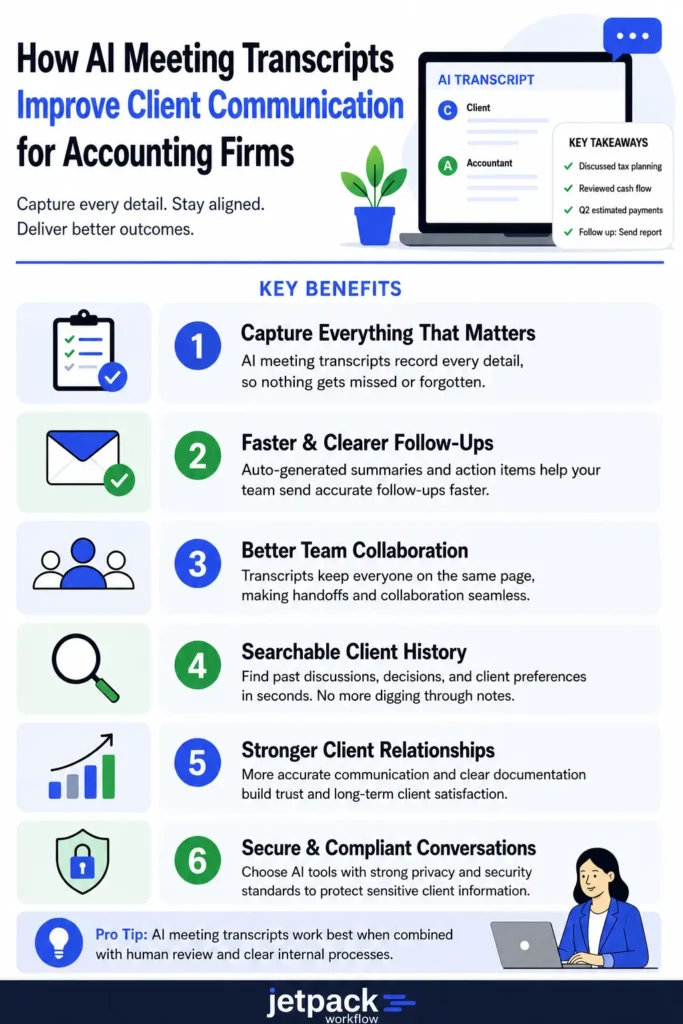
For accounting firms managing dozens or hundreds of client relationships, that can reduce misunderstandings, improve responsiveness, and create more consistent service. AI meeting transcripts help accounting firms reduce missed details and improve follow-up consistency.
Key Takeaways
- AI meeting transcripts help accounting firms capture client conversations automatically
- Firms use transcripts to improve follow-ups, reduce missed details, and document decisions
- Searchable meeting records make collaboration easier across accounting teams
- AI-generated summaries can speed up onboarding, tax planning, and advisory workflows
- Human review still matters, especially for compliance-sensitive discussions
What Are AI Meeting Transcripts?
AI meeting transcripts are automatically generated text records created from virtual or in-person conversations using speech recognition and natural language processing.
Most transcription tools integrate with platforms like:
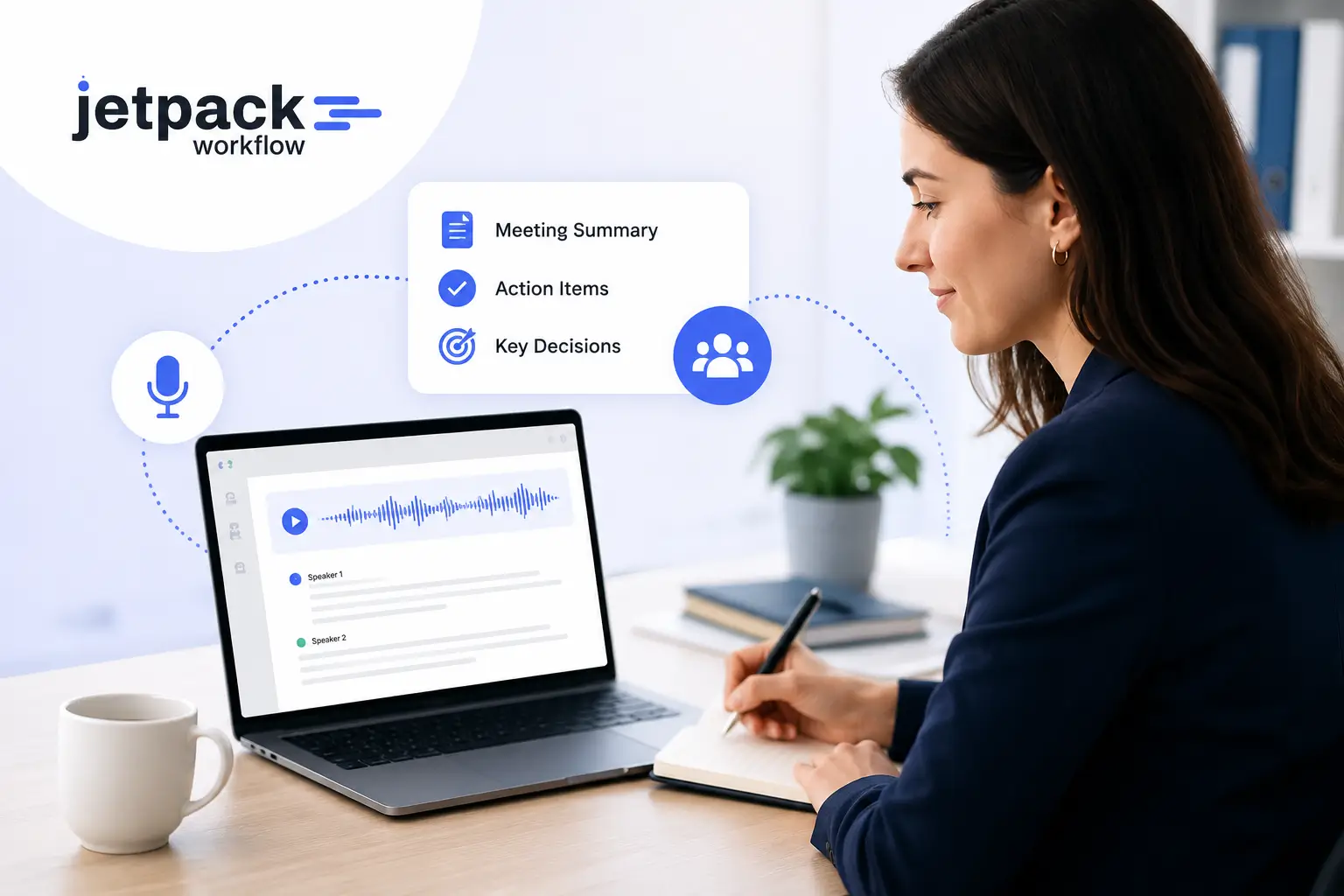
The software listens to the conversation, identifies speakers, converts speech into text, and often creates summaries or action items afterward.
For accounting firms, this means client meetings can be documented without someone manually taking extensive notes during the call.
Why Accounting Firms Are Adopting AI Meeting Transcripts
Client communication in accounting often involves technical discussions, financial details, deadlines, and compliance-related information. Missing one detail can create confusion later.
AI meeting transcripts help firms create a more reliable record of conversations.
Common reasons firms adopt them include:
- Reducing manual note-taking
- Improving documentation consistency
- Capturing client requests accurately
- Helping staff review prior conversations quickly
- Supporting remote and hybrid teams
- Making onboarding easier for new team members
Many firms are also expanding advisory services, where conversations tend to be longer and more strategic than traditional tax preparation calls. Transcripts make those discussions easier to revisit later.
How Firms Use AI Meeting Transcripts in Real Workflows
Client Discovery Calls
Initial consultations often include:
- business structure discussions
- bookkeeping issues
- tax concerns
- software stack reviews
- pricing conversations
AI transcripts allow firms to revisit everything discussed without relying on fragmented notes.
This becomes especially useful when:
- multiple staff members join later
- proposals are being prepared
- follow-up meetings happen weeks afterward
A searchable transcript can quickly answer questions like:
- “Did the client mention payroll issues?”
- “Which accounting software are they currently using?”
- “What timeline did they give for cleanup work?”
Tax Planning Meetings
Tax planning calls can become detail-heavy quickly.
Clients may discuss:
- estimated payments
- entity structures
- deductions
- retirement contributions
- business purchases
- multi-state tax issues
AI meeting transcripts help accountants keep a documented record of recommendations and client responses.
That can reduce confusion during busy tax seasons when firms are handling high volumes of communication simultaneously.
Advisory and CFO Services
Advisory-focused firms often have recurring strategy calls with clients.
These meetings may cover:
- cash flow forecasting
- profitability analysis
- hiring decisions
- operational concerns
- growth planning
Transcripts help firms track long-term discussions and revisit previous recommendations.
Instead of searching through scattered meeting notes, advisors can review prior conversations in minutes.
This creates better continuity across quarterly or monthly advisory engagements.
Internal Team Collaboration
Meeting transcripts are not only useful for client communication.
Many firms also use them internally for:
- training
- handoffs
- quality reviews
- workflow discussions
- onboarding
If a client manager is unavailable, another team member can quickly review transcript history before stepping into a conversation.
That reduces the risk of clients repeating information multiple times.
Benefits Beyond Documentation
Faster Follow-Ups
Many AI transcription platforms automatically generate:
- summaries
- action items
- deadlines
- meeting highlights
That helps firms send follow-up emails faster after calls.
Clients appreciate quick recaps because they clarify:
- what was discussed
- who is responsible for next steps
- upcoming deadlines
Clear communication often improves client satisfaction more than firms realize.
Better Client Experience
Clients do not want to repeat the same details in every meeting.
When firms maintain organized transcript records, conversations become more informed and personalized.
That creates a smoother experience, especially for:
- long-term clients
- advisory relationships
- complex business accounts
It also helps firms appear more organized and responsive.
Searchable Institutional Knowledge
One overlooked advantage of AI meeting transcripts is searchability.
Over time, transcripts create a knowledge base of:
- client preferences
- recurring issues
- operational history
- financial discussions
- prior recommendations
This can become valuable when:
- onboarding new employees
- reviewing historical decisions
- handling client transitions
- preparing annual reviews
Common AI Meeting Transcript Tools Accounting Firms Use
Several tools are commonly used alongside accounting workflows, including:
- Otter.ai
- Fireflies.ai
- Fathom
- Grain
Some firms also use transcription features built into:
- Zoom Communications
- Microsoft
The best option usually depends on:
- security requirements
- integrations
- pricing
- meeting volume
- CRM or workflow compatibility
Important Privacy and Compliance Considerations
Accounting firms handle sensitive financial information, so privacy matters.
Before adopting AI transcription software, firms should evaluate:
- data storage policies
- encryption standards
- retention settings
- user permissions
- compliance requirements
Some clients may also prefer not to have meetings recorded.
Clear communication and consent policies are important, especially when discussing confidential financial matters.
Firms should also review whether transcripts:
- are stored securely
- can be deleted when needed
- comply with internal data policies
Human review still matters as well. AI transcription is helpful, but it is not perfect. Financial terminology, names, and numbers should always be verified when accuracy is critical.
Best Practices for Using AI Meeting Transcripts Effectively
Accounting firms tend to get better results when they:
- create standardized meeting workflows
- organize transcripts by client or engagement
- review summaries before sharing them
- assign clear action items after meetings
- connect transcripts with CRM or workflow systems
The goal is not simply recording conversations. It is turning conversations into actionable information.
Firms that integrate transcripts into operational workflows usually gain more value than firms using them only as passive records.
Will AI Meeting Transcripts Replace Manual Notes Completely?
Probably not.
Many accountants still prefer adding:
- personal observations
- context
- client tone
- strategic insights
AI transcripts work best as a support tool rather than a complete replacement for professional judgment.
The biggest advantage is reducing administrative friction so accountants can focus more on client relationships and advisory work.
Frequently Asked Questions
Are AI meeting transcripts accurate enough for accounting firms?
Most modern transcription tools are highly accurate, but firms should still review transcripts for financial figures, names, and technical terminology before relying on them fully.
Do clients need to consent to meeting recordings?
In many cases, yes. Requirements vary depending on location and privacy laws. Firms should communicate recording policies clearly before meetings begin.
Can AI meeting transcripts integrate with accounting workflows?
Yes. Many tools integrate with CRMs, project management systems, and communication platforms commonly used by accounting firms.
What are the biggest benefits of AI meeting transcripts?
The main benefits include better documentation, faster follow-ups, improved team collaboration, and fewer missed details during client conversations.
Are AI meeting transcripts secure?
Security depends on the software provider. Firms should review encryption, access controls, data retention policies, and compliance standards before implementation.
Conclusion
AI meeting transcripts are becoming a practical tool for accounting firms that want more consistent client communication and better operational visibility.
They help reduce missed details, improve follow-ups, support advisory workflows, and create searchable records that teams can reference later.
For firms handling growing client demands, AI meeting transcripts can save time without sacrificing communication quality, especially when combined with thoughtful review and strong internal processes.
Last Updated: May 2026
Related Articles
- How to Simplify Your Accounting Firm: 5 Systems to Eliminate Bottlenecks
- How LaMichelle Built a 6-Figure Accounting Firm Serving Nonprofits
- From Spreadsheets to Systems: The Shift in Nonprofit Financial Management
- How Accounting Firms Are Valued in Today’s Market with Doug Lewis
- I Sold My Accounting Firm: A Panel Discussion on the Process and Lessons
- Inside the Minds of Firm Buyers: Lessons from Accounting M and A Leaders
- Scaling an Accounting Firm: Systems That Protect Client Experience
- How a Remote Accounting Firm Uses EOS to Scale from 6 to 10 Team Members in 90 Days
- The Power of Simplicity in Accounting Firms: Simplify Services with Better Packaging and Pricing
- How Tailor Hartman Took His Accounting Firm to 200K in Year 1
- Why Outsourcing plus Workflow Software is the Future of Accounting Firms
- How Jeff Seibert Is Using AI Accounting Firm Automation to Build a 90% Automated Firm
- How to Scale to a $1M Accounting Firm Without Hiring More Staff
Share this article