Accounting Firm Serving Nonprofits

Accountants are finding that niche specialization, referral-driven growth, and lean team structures can drive strong results without relying on paid ads. In a recent Growing Your Firm discussion, LaMichelle Hecht shared how she built a 6-figure accounting firm by focusing on nonprofits, using nearshore talent, and building systems that support consistent delivery.

Key Takeaways

  • Specializing in nonprofits can create clear positioning and consistent referrals
  • Nearshore hiring helps firms scale capacity without high overhead
  • Referral-based growth can outperform paid acquisition for niche firms
  • Simple systems and workflows support consistent service delivery
  • Small teams can generate strong revenue with the right structure

Jetpack Workflow Free Trial

Introduction

Building a successful accounting firm does not always require a large team or heavy marketing spend. In fact, many firms grow faster by narrowing their focus and building systems that support consistency.

LaMichelle shared how she built a 6-figure accounting firm by focusing on nonprofits, using referrals as the primary growth engine, and leveraging nearshore talent to scale delivery. Her approach highlights how niche positioning and operational clarity can drive predictable.

Why focusing on nonprofits created faster growth

Choosing a niche allowed LaMichelle to stand out in a crowded market.

  • Clear positioning made it easier for clients to understand her value
  • Nonprofits often require ongoing financial support
  • Referrals became more frequent within the same network
  • Messaging became simpler and more targeted

“You really do not need to serve everyone. Once we focused on nonprofits, everything became easier to explain and easier to sell.” – LaMichelle

Instead of competing broadly, the firm built authority within a specific segment, which led to more consistent inbound opportunities.

How Referral-based Growth replaced Paid Marketing

One of the most notable aspects of the firm’s growth was the reliance on referrals rather than ads.

  • Strong client relationships led to repeat referrals
  • Niche focus increased trust within the nonprofit community
  • Lower acquisition costs improved profitability
  • Growth became more predictable over time

They did not rely on ads. Most of their growth came from people referring them within the same space.

This approach shows that for niche firms, trust and reputation can outperform traditional marketing channels.

Using Nearshore Talent to scale Capacity

Scaling a firm requires increasing capacity without sacrificing margins.

  • Nearshore hiring reduced labor costs
  • Maintained quality while increasing output
  • Allowed the firm to take on more clients
  • Supported flexible team growth

“Hiring nearshore gave us the flexibility to grow without putting too much pressure on costs.”

Rather than over-hiring locally, the firm built a team structure that balanced cost and performance.

Why Systems matter more than Team Size

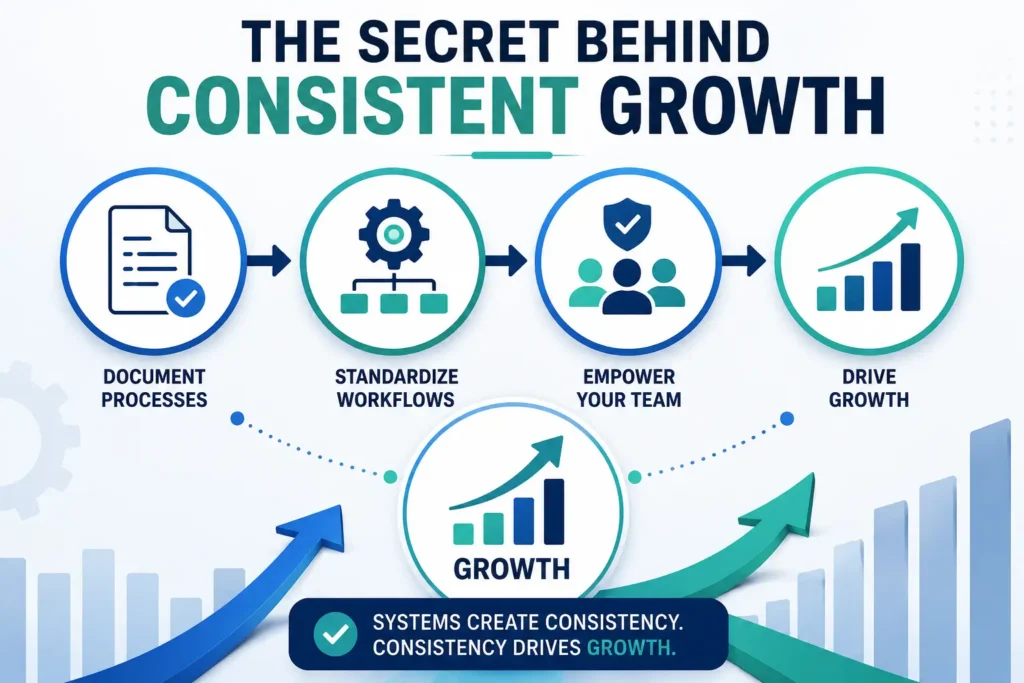
Growth often breaks firms that lack structure. LaMichelle focused on systems early.

  • Standardized processes for recurring work
  • Clear task ownership and deadlines
  • Consistent client communication workflows
  • Reduced reliance on memory or manual tracking

If you do not have systems, growth just creates more problems.

These systems allowed a smaller team to operate efficiently and deliver consistent results.

How a Small Team generated 6-figure Revenue

The firm demonstrated that revenue growth is not always tied to team size.

  • Focused service offerings increased efficiency
  • Recurring services improved revenue stability
  • Strong processes reduced rework
  • Clear niche reduced sales friction

“You do not need a big team to grow. You need the right structure and the right clients.”

By aligning services, systems, and team structure, the firm was able to scale without unnecessary complexity.

What other Accounting Firms can learn

  • Choose a niche to simplify positioning and marketing
  • Build referral channels before investing in ads
  • Use flexible hiring models to manage capacity
  • Invest in systems early to avoid operational bottlenecks
  • Focus on recurring services for predictable revenue

These principles can help firms grow sustainably while maintaining control.

Conclusion

LaMichelle’s approach shows that scaling an accounting firm does not require complexity. With the right niche, systems, and team structure, firms can grow efficiently while maintaining quality and profitability.

Frequently Asked Questions

Why is choosing a niche important for accounting firms?
A niche helps firms stand out, build authority, and attract more targeted referrals.

Can referral-based growth replace paid marketing?
Yes. Many niche firms grow successfully through referrals by building strong client relationships.

What is nearshore hiring in accounting?
Nearshore hiring involves working with team members in nearby countries to reduce costs while maintaining collaboration.

How do systems help accounting firms scale?
Systems create consistency, reduce errors, and allow teams to manage more work without increasing stress.

Can a small accounting team generate high revenue?
Yes. With the right niche, pricing, and processes, small teams can generate strong revenue efficiently.

Related Articles

Build a Scalable Accounting Firm Without the Chaos

If your firm is growing but your processes are not keeping up, it becomes harder to manage deadlines, team workload, and client expectations. Jetpack Workflow helps you standardize recurring work, track progress, and keep your entire team aligned.

See How It Works

See Jetpack Workflow In Action

Get under the hood of Jetpack Workflow’s accounting workflow and project management platform. See some of the top features and how it helps your firm standardize, automate, and track client work more efficiently.
Questions to ask when onboarding a new bookkeeping client

Onboarding is where bookkeeping relationships are won or lost. The right questions at the start help you avoid confusion, reduce back-and-forth, and build a workflow that runs smoothly from day one.

Firms that standardize onboarding questions tend to deliver work faster, reduce errors, and improve client satisfaction. Instead of reacting to missing information later, they collect everything upfront and build clear processes around it.

Download your FREE Bookkeeping Client Onboarding Checklist

Key Takeaways

  • Structured onboarding questions reduce delays and rework
  • Clear expectations improve client communication and trust
  • Standardized templates help teams stay consistent
  • Early data collection prevents workflow bottlenecks
  • Strong onboarding leads to better long-term client relationships

Jetpack Workflow Free Trial

Introduction

Many bookkeeping issues start long before the actual work begins. Missing documents, unclear responsibilities, and inconsistent communication often trace back to a weak onboarding process.

By asking the right questions early, you can build a system that keeps everything organized, repeatable, and scalable.

What basic business information should you collect first?

Start with foundational details that define the client’s business and structure.

  • What is the legal business name and entity type?
  • What industry does the business operate in?
  • Who are the key contacts and decision-makers?
  • What accounting method is used (cash or accrual)?
  • What accounting software is currently in place?

Getting this information early ensures your workflow aligns with how the business operates.

What financial accounts and access do you need?

Access is one of the biggest onboarding bottlenecks. Clarify everything upfront.

  • What bank accounts need to be included?
  • Are there credit cards or loans to track?
  • Do you have access to accounting software?
  • Are there payroll or payment platforms involved?
  • Who will grant and manage access permissions?

If access is delayed, everything else slows down. Having a checklist for access prevents unnecessary delays later.

What bookkeeping scope and services are expected?

Misalignment on scope leads to frustration on both sides. Define it clearly.

  • What services are included (monthly bookkeeping, reporting, cleanup)?
  • Are there deadlines for deliverables?
  • Will you handle payroll, invoicing, or bill pay?
  • Are advisory or reporting services included?
  • What level of detail is expected in reports?

Clear scope allows you to build accurate workflows and avoid scope creep.

What documents and historical data are required?

To start clean, you need complete and accurate records.

  • How many months or years of historical data are needed?
  • Are prior financial statements available?
  • Are there unreconciled accounts?
  • Are there missing transactions or incomplete records?
  • Who will provide documents and how often?

Most cleanup work comes from missing or incomplete data. Collecting this early reduces rework and delays.

How should communication and approvals work?

Communication gaps can break even the best workflows.

  • Who is the main point of contact?
  • What is the preferred communication method?
  • How quickly should responses be expected?
  • Who approves reports or transactions?
  • How are urgent issues handled?

Defining communication rules keeps projects moving without confusion.

What recurring workflows need to be set up?

Bookkeeping is built on recurring tasks. Identify them early.

  • What tasks are monthly, weekly, or quarterly?
  • What deadlines must be met consistently?
  • Are there recurring reports or deliverables?
  • What approvals are needed each cycle?
  • Who is responsible for each step?

If it repeats, it should be systemized. Mapping recurring workflows ensures consistency and scalability.

What potential risks or issues should be addressed upfront?

Every client has unique challenges. Identify them early.

  • Are there compliance or tax risks?
  • Are financial records disorganized?
  • Are there cash flow concerns?
  • Are there upcoming audits or deadlines?
  • Are there known process gaps?

Addressing risks early prevents bigger problems later.

What templates and systems will support onboarding?

Standardization is key to scaling bookkeeping services.

  • Do you use onboarding checklists?
  • Are there standardized intake forms?
  • Do you have workflow templates for recurring work?
  • Are tasks assigned automatically?
  • Is progress tracked in a central system?

Using templates ensures every client is onboarded consistently, regardless of team size.

Using Systems to Improve Workflow Efficiency

After identifying where bottlenecks occur, the next step is implementing systems that improve visibility and consistency across the firm.

Workflow management tools built specifically for accounting firms help teams:

  • Track client projects and recurring deadlines
  • Assign tasks clearly across team members
  • Balance workloads across staff
  • Standardize processes across services
  • Improve visibility into firm operations

Centralized workflow systems reduce reliance on manual updates and disconnected tools.

How Jetpack Workflow Helps Accounting Firms Stay Organized

Jetpack Workflow helps accounting firms manage recurring work, client projects, and team capacity within one centralized platform.

Key features include:

  • Recurring task automation
  • Workflow templates designed for accounting services
  • Clear project visibility across all clients
  • Deadline tracking and reminders
  • Team workload management

With structured workflows in place, firms can onboard clients more efficiently and maintain consistency as they grow.

Conclusion

Onboarding is not just an administrative step. It is the foundation of your entire client relationship.

By asking the right questions and building structured workflows, bookkeeping firms can avoid common issues, deliver work more efficiently, and create a better experience for both clients and teams.

Frequently Asked Questions

Why is onboarding important for bookkeeping clients?
Onboarding ensures all necessary information, access, and expectations are set before work begins, reducing errors and delays.

What is the biggest onboarding mistake bookkeeping firms make?
Not collecting complete information upfront, which leads to rework and miscommunication.

How can onboarding be standardized?
Using checklists, templates, and workflow systems to ensure every client follows the same process.

What tools help with onboarding workflows?
Workflow management tools help assign tasks, track progress, and centralize communication.

How long should onboarding take?
It depends on complexity, but a structured process can significantly reduce onboarding time.

Turn Your Onboarding Checklist Into a Repeatable System

Build a smoother bookkeeping onboarding process with structured workflows, templates, and clear task tracking. Jetpack Workflow helps your team stay organized and consistent as you grow.

START YOUR FREE TRIAL

See Jetpack Workflow In Action

Get under the hood of Jetpack Workflow’s accounting workflow and project management platform. See some of the top features and how it helps your firm standardize, automate, and track client work more efficiently.
How Accounting Firms Are Valued in Today’s M&A Market

Scaling an accounting firm is one path to growth. But for many firm owners, the real long-term question is this:

What is my firm actually worth?

In a recent episode of the Growing Your Firm podcast, Doug Lewis, Managing Director at Visionary Group, shared how buyers are evaluating accounting firms today, what drives valuation, and what firm owners should be preparing for whether they plan to sell or not.

His message was clear. Whether you sell in two years or twenty, you should be building your firm with value in mind.

Key Takeaways

  • Profitability is now the primary driver of accounting firm valuation
  • Talent and leadership are becoming just as important as financials
  • CAS (Client Accounting Services) is one of the most valuable revenue streams
  • Culture fit is often the first and most overlooked factor in M&A deals
  • Every firm should be built as if it will eventually be sold

Jetpack Workflow Free Trial

Introduction

The accounting firm M&A landscape has changed significantly over the past few years.

Historically, firms were valued based on a multiple of gross revenue. Today, that model has shifted. Buyers are more focused on profitability, scalability, and long-term sustainability.

Doug Lewis works directly with firms on both the buy side and sell side of transactions. His perspective gives a clear look into what buyers actually care about and what many firm owners misunderstand.

“Number one on the list these days, it’s the profitability in the firm, the EBITDA, the adjusted EBITDA in the firm.” – Doug

What Buyers look for in Accounting Firms today

When buyers evaluate accounting firms, there are a few key factors that consistently rise to the top.

  • Profitability, especially adjusted EBITDA
  • Strength of the team and leadership pipeline
  • Recurring and scalable revenue streams
  • Service mix, especially CAS
  • Client base and industry focus

Doug emphasized that profitability is now the starting point for most buyers.

In the past, firms were often valued on revenue multiples. Today, buyers want to understand what actually reaches the bottom line before owner compensation.

Why Profitability matters more than ever

Profitability has become the foundation of firm valuation.

  • Buyers want predictable, sustainable margins
  • Higher profitability signals operational efficiency
  • It reduces risk for the acquiring firm
  • It makes future scaling easier

A common benchmark mentioned was around 30% profitability before owner compensation, though this can vary widely depending on firm structure.

Firms operating below that may still be valuable, but they will face more scrutiny during evaluation.

The Growing Importance of CAS (Client Accounting Services)

One of the biggest valuation drivers today is CAS.

  • CAS provides recurring, predictable revenue
  • It is easier to scale than traditional services
  • It creates long-term client relationships
  • It improves valuation multiples in many cases

Doug explained that buyers love the “stickiness” of CAS revenue. Compared to project-based services, CAS creates ongoing engagement and stability.

Firms that invest in CAS often position themselves as more attractive acquisition targets.

“A strong CAS practice right now, those are trading for premiums.” – Doug

Why Talent can Make or Break a Deal

While financials matter, talent is becoming just as critical.

  • Strong leadership ensures continuity after acquisition
  • Skilled teams reduce transition risk
  • Talent shortages increase the value of existing staff
  • Buyers often prioritize firms with stable teams

In some cases, talent is even more important than profitability.

If a firm depends heavily on one owner or partner, it becomes much harder to transition or sell.

Talent is kind of number two on that list. Some are honestly placing that at number one these days.” – Doug

The Most Overlooked Factor: Culture Fit

One of the most important insights from Doug was this:

Many deals fail because of culture, not numbers.

  • Misaligned values create long-term friction
  • Poor integration leads to team turnover
  • Differences in work style slow down operations
  • Lack of trust can derail the entire deal

Doug described what he calls the “airport test”:

If you were stuck in an airport with this person for hours, would you actually want to spend time with them?

If the answer is no, the deal may not work, regardless of the numbers.

Red Flags Buyers Look for

Buyers are also watching for risks that could impact value.

  • High partner dependency for billable work
  • Lack of succession planning
  • Inconsistent profitability
  • Weak systems or workflows
  • Poor team retention

One major red flag is when partners are doing most of the work themselves. While this can increase short-term profitability, it creates risk because those hours need to be replaced after the transition.

Internal Succession vs Selling Your Firm

Not every firm needs to sell externally.

Doug emphasized that every firm will eventually transition ownership in one way or another.

  • Internal succession through partners or managers
  • External sale to another firm
  • Private equity or outside investment

The key idea is this:

You are always building your firm to sell, even if the buyer is internal.

Firms that prepare early have more options and better outcomes.

The Impact of Private Equity on Firm Valuations

Private equity has changed the accounting M&A landscape.

  • Increased focus on profitability over revenue
  • More cash in deal structures
  • Faster transaction timelines in some cases
  • Higher competition for quality firms

However, not all private equity groups are the same.

Some are highly experienced in accounting, while others are still learning the industry. This creates a wide range of deal quality and outcomes.

How to Increase your Firm’s Value Today

Whether you plan to sell or not, the same principles apply.

  • Improve profitability and pricing strategy
  • Build a strong leadership team
  • Expand CAS or recurring service lines
  • Standardize workflows and systems
  • Reduce reliance on individual partners

Firms that focus on these areas are more scalable, more efficient, and more valuable.

Conclusion

Accounting firm valuations are no longer based on simple revenue multiples.

Today, buyers are looking at profitability, talent, systems, and long-term sustainability.

The firms that command the highest valuations are the ones that operate with structure, consistency, and clear growth potential.

Whether you are planning to sell or stay independent, the strategy is the same:

Build a firm that runs well without relying on you.

Frequently Asked Questions

How are accounting firms valued today?
Most accounting firms are now valued based on profitability, especially adjusted EBITDA, rather than just revenue multiples.

What makes an accounting firm more valuable?
Strong profitability, recurring revenue, a stable team, and scalable systems all increase firm value.

What is CAS in accounting?
CAS stands for Client Accounting Services. It includes recurring services like bookkeeping, reporting, and advisory, which provide predictable revenue.

Does private equity increase firm valuations?
Private equity has increased competition and deal size in many cases, but valuation still depends on the firm’s fundamentals.

Should I build my firm to sell even if I do not plan to?
Yes. Building your firm as if it will be sold improves structure, profitability, and long-term sustainability.

Related Articles

Build a Firm That’s Ready to Scale or Sell

If your firm relies on manual processes, scattered communication, or unclear workflows, growth becomes harder and valuation suffers. Jetpack Workflow helps accounting firms standardize processes, track deadlines, and manage client work with clarity. Create a firm that is organized, scalable, and ready for whatever comes next.

See How It Works

See Jetpack Workflow In Action

Get under the hood of Jetpack Workflow’s accounting workflow and project management platform. See some of the top features and how it helps your firm standardize, automate, and track client work more efficiently.
Scale Your Accounting Firm Without Losing Client Experience

Scaling an accounting firm often comes with a tradeoff. As firms grow, client experience tends to decline. Response times slow down, communication becomes inconsistent, and clients begin to feel like just another number.

But that does not have to happen.

In a recent session from the Growing Your Firm Summit, Kila Hill-Trawick shared how her firm scaled while maintaining a high-touch, boutique client experience. The key was not working harder or hiring faster. It was building systems that protect both the team’s capacity and the client relationship.

Key Takeaways

  • Scaling does not require sacrificing client experience if systems are designed intentionally
  • Clients value consistency, clarity, and communication more than constant availability
  • Standardized workflows help firms deliver a reliable and personal experience at scale
  • Clear boundaries improve both client satisfaction and team efficiency
  • Technology and AI should support relationships, not replace them

Jetpack Workflow Free Trial

Introduction

Many accounting firm owners believe that growth inevitably leads to a worse client experience. As the number of clients increases, it becomes harder to maintain responsiveness, personalization, and quality.

However, the real issue is not growth itself. It is the lack of systems.

Firms that scale successfully do not rely on more effort. They rely on better processes that ensure every client receives a consistent and reliable experience.

Why scaling often breaks client experience

As firms grow, operational complexity increases. Without structure, this leads to breakdowns in communication and delivery.

  • More clients create more communication channels and confusion
  • Teams struggle to track deadlines and deliverables
  • Inconsistent processes lead to missed steps or delays
  • Clients feel like they are being handled reactively instead of proactively

“Growth doesn’t have to come at the cost of connection.”- Kila

The firms that avoid these issues are the ones that design their workflows intentionally before scaling.

What clients actually expect from accounting firms

Many firms assume that high-touch service means being available all the time. In reality, clients want something much simpler and more reliable.

  • Clear communication about what is happening and what comes next
  • Consistent timelines and delivery expectations
  • Proactive updates instead of chasing for answers
  • Confidence that nothing will fall through the cracks

Clients are not measuring how often you respond. They are measuring how predictable and trustworthy your service feels.

How systems protect client experience at scale

The key to scaling without losing quality is building systems that handle the operational workload.

  • Client portals that centralize communication and documents
  • Automated workflows that track tasks and deadlines
  • Standardized onboarding and delivery processes
  • Structured communication frameworks for the team

“Technology and systems should free you up to be more human with your clients.”-  Kila

Instead of replacing the relationship, systems make it easier to deliver a better one.

The role of communication systems in scaling

One of the most important systems in a growing firm is communication.

  • Set a clear response window such as 24 to 48 hours
  • Define where communication should happen (portal, email, etc.)
  • Standardize how responses are structured across the team
  • Provide proactive updates before clients ask

When communication is structured, clients feel supported without requiring constant availability.

Why boundaries improve client experience

Many firm owners hesitate to set boundaries, believing it will reduce client satisfaction. In practice, the opposite is true.

  • Clear expectations reduce confusion and frustration
  • Defined scopes prevent overwork and burnout
  • Response windows create reliability
  • Structured communication improves consistency

“Boundaries create a better client experience.”- Kila

When clients know what to expect, they feel more confident and more satisfied.

Key workflows every scaling firm needs

To maintain quality at scale, firms should focus on systemizing key client touchpoints.

  • Proposal and pre-onboarding processes
  • Client onboarding and diagnostics
  • Tax return and financial report delivery
  • Ongoing status updates and communication

Standardizing these moments ensures every client receives the same level of care.

How to balance automation and personal service

The goal of automation is not to remove the human element. It is to protect it.

  • Use automation for reminders, tracking, and preparation
  • Use AI for summaries, drafts, and meeting prep
  • Keep human interaction focused on advisory and relationships
  • Delegate repeatable tasks to systems or team members

This balance allows firms to scale without losing what makes them valuable to clients.

Conclusion

Scaling an accounting firm does not have to come at the cost of client experience. Firms that grow successfully are not doing more work. They are building better systems.

By standardizing workflows, improving communication, and setting clear expectations, accounting firms can scale while maintaining a high-quality, high-touch client experience.

Frequently Asked Questions

How can an accounting firm scale without losing client experience?
Firms can scale without losing client experience by implementing standardized workflows, clear communication systems, and automation tools that ensure consistency across all clients.

What systems are most important for scaling an accounting firm?
The most important systems include client onboarding workflows, task and deadline management, centralized communication tools, and automated reminders to keep projects on track.

Why does client experience decline as firms grow?
Client experience often declines due to a lack of structured processes. Without systems, communication becomes inconsistent, deadlines are missed, and clients feel less supported.

How do workflows improve accounting firm operations?
Workflows provide structure and visibility, helping teams manage recurring tasks, track deadlines, and ensure nothing falls through the cracks.

What role does communication play in scaling a firm?
Clear communication builds trust and reduces client frustration. Setting response expectations and providing proactive updates helps maintain a high-quality experience.

Can small accounting firms benefit from workflow systems?
Yes. Small firms benefit the most because systems allow them to scale efficiently without immediately needing to hire more staff.

Related Articles

Scale Your Firm Without Losing Control

Growth should not mean missed deadlines, scattered work, or frustrated clients. With the right workflow system, you can keep every task, deadline, and client interaction organized as your firm expands.

Start building a firm that runs on systems, not stress.

See How It Works

See Jetpack Workflow In Action

Get under the hood of Jetpack Workflow’s accounting workflow and project management platform. See some of the top features and how it helps your firm standardize, automate, and track client work more efficiently.
Month-End Close Checklist Template

A month-end close checklist template helps accounting teams standardize workflows, reduce errors, and close books faster. This upgraded version includes every critical step, from preparation to final close and reporting, so nothing gets missed.

Whether you are managing multiple clients or internal accounting, this template gives your team a repeatable system that scales.

Key Takeaways

  • A month-end close checklist standardizes accounting workflows and reduces errors

  • Clear task ownership and deadlines improve accountability

  • Financial reporting and final close steps are critical for accuracy

  • Structured workflows help teams close books faster each month

  • Workflow tools can automate recurring tasks and improve visibility

Jetpack Workflow Free Trial

A month-end close checklist ensures accurate financial reporting by organizing tasks, assigning ownership, and tracking progress. This template includes full workflow coverage from reconciliation to final reporting and close.

Download the Month-End Close Checklist Template

Use this complete month-end close checklist template to manage your monthly close process:

This version includes task stages, owners, due dates, time tracking, and notes for full visibility.

What is a month-end close checklist template?

A month-end close checklist template is a structured list of tasks that accounting teams follow to finalize financial records at the end of each month.

It ensures:

  • All transactions are recorded

  • Accounts are reconciled

  • Financial statements are accurate

  • The accounting period is properly closed

It replaces scattered processes with a clear, repeatable workflow.

Why use a month-end close checklist template?

A structured checklist improves both efficiency and accuracy.

  • Consistency across every month

  • Reduced errors and missed steps

  • Faster close timelines

  • Better team coordination

  • Clear visibility into progress

Without a checklist, closing the books becomes inconsistent and harder to manage as your firm grows.

How to use the month-end close checklist template

Step 1: Assign each task to a team member
Step 2: Set deadlines for every stage
Step 3: Track progress using status updates
Step 4: Review all completed tasks
Step 5: Finalize and close the accounting period

Consistency is what makes the checklist effective.

Complete Month-End Close Checklist Template

This upgraded template follows a full end-to-end workflow.

1. Prepare for closing

  • Back up accounting data

  • Set closing deadlines and timelines

  • Assign tasks to team members

  • Review prior month issues

  • Set reminders and workflow tracking

2. Record and reconcile revenue

  • Record all sales and income

  • Match revenue with invoices and deposits

  • Review accounts receivable

  • Follow up on overdue invoices

  • Apply late fees if applicable

3. Reconcile expenses

  • Record all expenses and receipts

  • Match supplier invoices to transactions

  • Review accounts payable

  • Resolve discrepancies and disputes

  • Process outstanding payments

4. Reconcile balance sheet accounts

  • Reconcile bank accounts

  • Reconcile credit card accounts

  • Investigate discrepancies

  • Review unusual transactions

5. Petty cash and cash controls

  • Count cash on hand

  • Match to accounting records

  • Log discrepancies

  • Replenish petty cash if needed

6. Payroll and accruals

  • Verify payroll entries

  • Record accruals (expenses and revenue)

  • Adjust prepaid expenses

  • Review deferred revenue

7. Inventory (if applicable)

  • Perform inventory counts

  • Adjust inventory records

  • Review cost of goods sold

8. Generate financial statements

  • Profit and Loss statement

  • Balance Sheet

  • Cash Flow statement

9. Review financial reports

  • Analyze variances

  • Identify unusual trends

  • Compare actual vs expected performance

  • Add notes and explanations

10. Close the accounting period

  • Final review of all accounts

  • Lock the accounting period

  • Save reports and documentation

  • Prepare for next cycle

What is included in this template

This template includes:

  • Stage-based workflow structure

  • Task-level breakdown

  • Assigned team members

  • Due dates

  • Status tracking (not started, in progress, completed)

  • Time tracking

  • Notes for context and explanations

Everything needed to manage the full close process.

Common errors this checklist helps prevent

  • Missing transactions

  • Unreconciled accounts

  • Duplicate entries

  • Incorrect accruals

  • Delayed reporting

  • Incomplete financial reviews

A structured checklist reduces these risks significantly.

Who this template is for

  • Accounting firms managing multiple clients

  • Bookkeepers handling recurring monthly closes

  • Finance teams in small and mid-sized businesses

  • CFOs and controllers overseeing reporting

  • Remote accounting teams needing standardized workflows

Best practices for month-end closing

  • Start tasks earlier in the month

  • Break work into weekly workflows

  • Automate repetitive processes

  • Communicate with clients early

  • Review financials before closing

  • Keep the process simple and consistent

Scale Your Firm With Better Financial Workflows

Spreadsheets can be useful, but managing a month-end close checklist across multiple clients quickly becomes time consuming and prone to errors without the right system in place.

Jetpack Workflow helps accounting firms track recurring close tasks, manage deadlines, and ensure every trial balance review happens on time with full visibility across clients.

You can standardize your month-end close process, assign clear ownership for each task, and keep your team accountable without relying on manual follow ups.

If you need more essential accounting templates, you can also download our other free resources. These include the General Ledger Template, Bank Reconciliation Template, Payroll Template, Balance Sheet Template, Profit and Loss Template , T Account Template and our Bookkeeping Templates collection. Each one is designed to help accountants and bookkeepers complete monthly close work faster and with fewer errors.

Frequently Asked Questions

What is a month-end close checklist template?
A structured list of tasks used to finalize financial records at the end of each month.

How long should the month-end close process take?
Most teams complete it within a few days to one week depending on complexity.

Who should use a month-end close checklist?
Accountants, bookkeepers, and finance teams managing recurring closes.

How can I automate my month-end close process?
Using workflow tools like Jetpack Workflow helps automate tasks and improve efficiency.

Improve Your Month-End Close Process

If you want better visibility and control over recurring accounting work, Jetpack Workflow can help you streamline trial balance reviews and month-end close processes.

Start your free trial and see how accounting firms use Jetpack Workflow to manage work, not just track it.

START YOUR FREE TRIAL

See Jetpack Workflow In Action

Get under the hood of Jetpack Workflow’s accounting workflow and project management platform. See some of the top features and how it helps your firm standardize, automate, and track client work more efficiently.
remote accounting firm using EOS to scale team from 6 to 10 employees and improve workflow management

A remote accounting firm scaled quickly by first building strong systems using EOS (Entrepreneurial Operating System). Instead of relying on ads, growth came from long-term relationships. Clear roles, weekly meetings, time tracking, and proactive workflows helped the team handle rapid client and team growth without operational chaos.

Key Takeaways

  • EOS helps remote accounting firms define roles, priorities, and accountability before scaling

  • Slow, intentional growth builds systems that can handle rapid expansion later

  • Relationship-driven marketing can generate high-quality inbound clients over time

  • Time tracking and effective hourly rate are critical for managing profitability

  • Weekly workflows and proactive communication help reduce workload pressure and improve team capacity

Jetpack Workflow Free Trial

Introduction

Scaling a remote accounting firm is rarely just about getting more clients. Most firms struggle when growth outpaces their systems, leading to overwhelmed teams, inconsistent processes, and missed deadlines.

In this case, the firm took a different approach. Led by Ben Curtis, CPA, Cofounder and CEO of Good Measure Financial, the team spent years building a strong operational foundation using EOS before experiencing rapid growth. Instead of rushing to scale, they focused on structure, accountability, and having the right people in the right roles.

“We really intentionally grew slowly… building a solid foundation with the right team members and the right systems in place.”- Ben

That decision made all the difference when growth accelerated.

Because their systems were already in place, they were able to scale from 6 to 10 team members in just 90 days without creating operational chaos or sacrificing service quality.

How did this remote accounting firm scale so quickly?

The firm grew from 6 to 10 team members in about 90 days, but the growth itself was not sudden in origin.

It came from years of relationship-building.

Rather than relying heavily on ads or outbound tactics, the firm focused on:

  • Building trust with referral partners

  • Having consistent conversations with their network

  • Providing value without expecting immediate returns

Over time, these efforts compounded and led to a strong pipeline of aligned clients.

How does EOS help a remote accounting firm scale?

The firm uses EOS as a flexible framework, not a rigid system. They apply what works and ignore what does not fit their size or structure.

Key EOS elements they rely on include:

  • Vision Traction Organizer (VTO) for clarity and direction

  • Weekly Level 10 (L10) meetings for accountability

  • Clear role ownership across leadership

  • Quarterly priorities to stay focused

These systems ensure the team stays aligned even during periods of rapid change.

How are roles structured in a growing remote accounting firm?

Clear role definition was established early and maintained as the firm scaled.

Responsibilities were divided across leadership functions:

  • Operations, systems, and team management

  • Sales, marketing, and relationship development

They also separate ownership from operational roles, which helps maintain accountability and avoid confusion as the team grows.

What KPIs does the firm use to manage growth?

The firm focuses on a small number of metrics that drive most operational decisions.

Core KPIs include:

  • Time tracking (actual vs expected)

  • Effective hourly rate

  • Team capacity

  • Service line performance

Time tracking is especially important, not as a control mechanism but as a diagnostic tool.

“The time tracking allows us to actually have all those conversations… there’s always a story behind the numbers.” – Ben

These insights help identify inefficiencies, pricing issues, and training opportunities.

How does the firm manage workload and capacity?

To avoid burnout and bottlenecks, the firm actively manages how work is distributed throughout the month.

Instead of concentrating tasks in a short closing window, they:

  • Shift work earlier in the month

  • Break tasks into smaller, consistent workflows

  • Monitor team capacity regularly

This approach creates a more balanced workload and improves team performance.

How do weekly workflows reduce operational stress?

The firm uses weekly workflows to reduce the pressure of monthly deadlines.

Examples include:

  • Weekly reconciliations

  • Regular data syncing

  • Ongoing accounts receivable tracking

  • Continuous financial review processes

While this may seem less efficient on paper, it creates a smoother operational rhythm and reduces last-minute stress.

Why proactive communication is critical for scaling firms

Missing client information is one of the biggest causes of delays in accounting workflows.

To address this, the firm prioritizes proactive communication.

Their approach includes:

  • Requesting data earlier

  • Using tools to gather context efficiently

  • Reducing unnecessary follow-ups

This helps maintain consistent delivery timelines even as the client base grows.

Why founder-led sales still works at this stage

Founder-led sales continues to play a key role in the firm’s growth.

This approach works because:

  • Founders communicate value clearly

  • Trust builds faster

  • Close rates remain high

The firm focuses on alignment rather than aggressive selling.

“You don’t sell what you don’t believe in… prospects can sniff that out.” –  Ben

This ensures they attract the right clients and build long-term relationships.

Conclusion

Scaling a remote accounting firm is not just about acquiring more clients. It is about building the systems that support growth.

This firm succeeded because it:

  • Built a strong operational foundation using EOS

  • Invested in relationships over time

  • Focused on key performance metrics

  • Managed team capacity intentionally

When growth came, they were prepared.

That preparation is what allowed them to scale from 6 to 10 team members in 90 days without losing control.

Frequently Asked Questions

What is EOS in accounting firms?
EOS is a framework that helps accounting firms define roles, set priorities, and improve accountability through structured processes.

Why is EOS effective for remote accounting firms?
EOS provides structure and clarity, which helps remote teams stay aligned and operate efficiently.

What metrics should accounting firms track when scaling?
Firms should track time, effective hourly rate, team capacity, and client profitability.

How can accounting firms handle rapid growth without burnout?
By smoothing workloads, using consistent workflows, and building systems before scaling.

Is founder-led sales scalable for accounting firms?
It works well in early stages by improving trust and conversion rates, though it may need to evolve as the firm grows.

Related Articles

Improve Your Accounting Firm’s Workflow and Capacity

Scaling your firm requires more than just more clients. With the right systems, task management, and visibility across your team, you can grow without overwhelming your staff.

Start your free trial and see how better workflows can support your firm’s growth.

See How It Works

See Jetpack Workflow In Action

Get under the hood of Jetpack Workflow’s accounting workflow and project management platform. See some of the top features and how it helps your firm standardize, automate, and track client work more efficiently.